Easy Balsamic Glaze Recipe
This easy balsamic glaze recipe takes just two ingredients, good balsamic vinegar and brown sugar, and simmers into a glossy, sweet tangy drizzle in about 15 minutes. Once you make it at home, you’ll never need the squeeze bottle again.
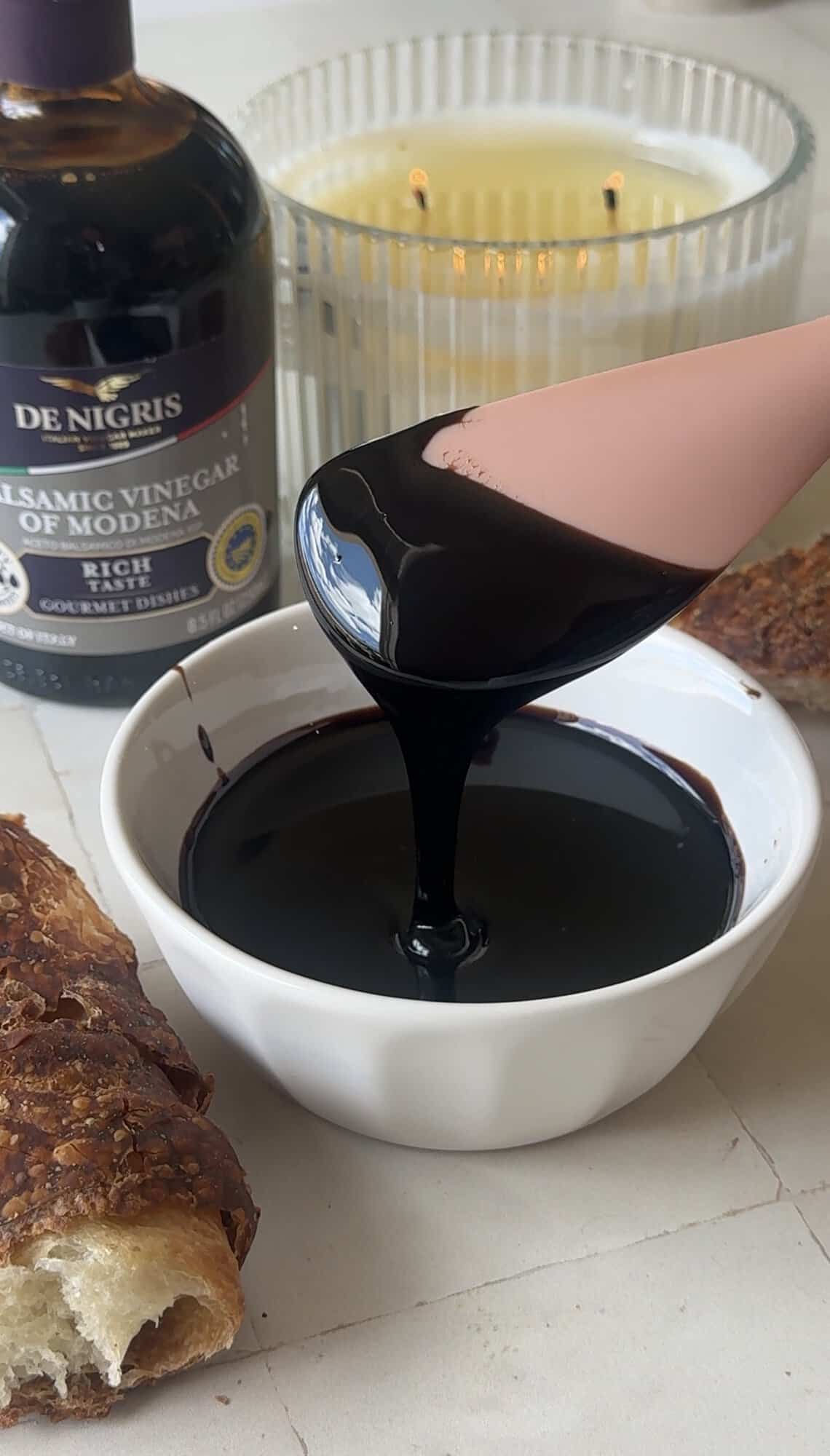
The first time I ever had balsamic glaze, I was in high school watching the Cooking Channel. Someone was making a classic caprese salad, and right at the end they drizzled this dark, shiny syrup over the tomatoes and mozzarella. I had never seen it before, and I had to taste it. I ran to Publix, grabbed a bottle, and it was just as delicious as it looked.
Years later, I realized I could make my own at home. Homemade balsamic glaze has far fewer ingredients than most store-bought bottles, and it tastes just like the balsamic glazes I’ve had in Italy: rich, a little syrupy, and perfectly balanced between sweet and tangy. Now it’s a staple in my kitchen, and I reach for it on everything from salads and roasted vegetables to chicken and even breakfast toast.
Why You’ll Love This Homemade Balsamic Glaze
- Only two ingredients: Balsamic vinegar and brown sugar. That’s it. Minimal ingredients is always a win in my book, and you probably have both in your pantry right now.
- Sweet and tangy: The vinegar brings the tang and the brown sugar rounds it out with a deep, caramel-like sweetness, so it works on savory dinners, fresh salads, and sweet breakfast toast alike.
- A batch that lasts: One small batch keeps for weeks in the fridge, so you can make it once and drizzle all month without worrying it’ll go to waste.
- No fillers: Some store-bought glazes include thickeners or added coloring. Homemade is just vinegar and sugar, cooked down.
- Ready in about 15 minutes: It’s mostly hands-off simmering while you prep the rest of dinner.
What Is Balsamic Glaze?
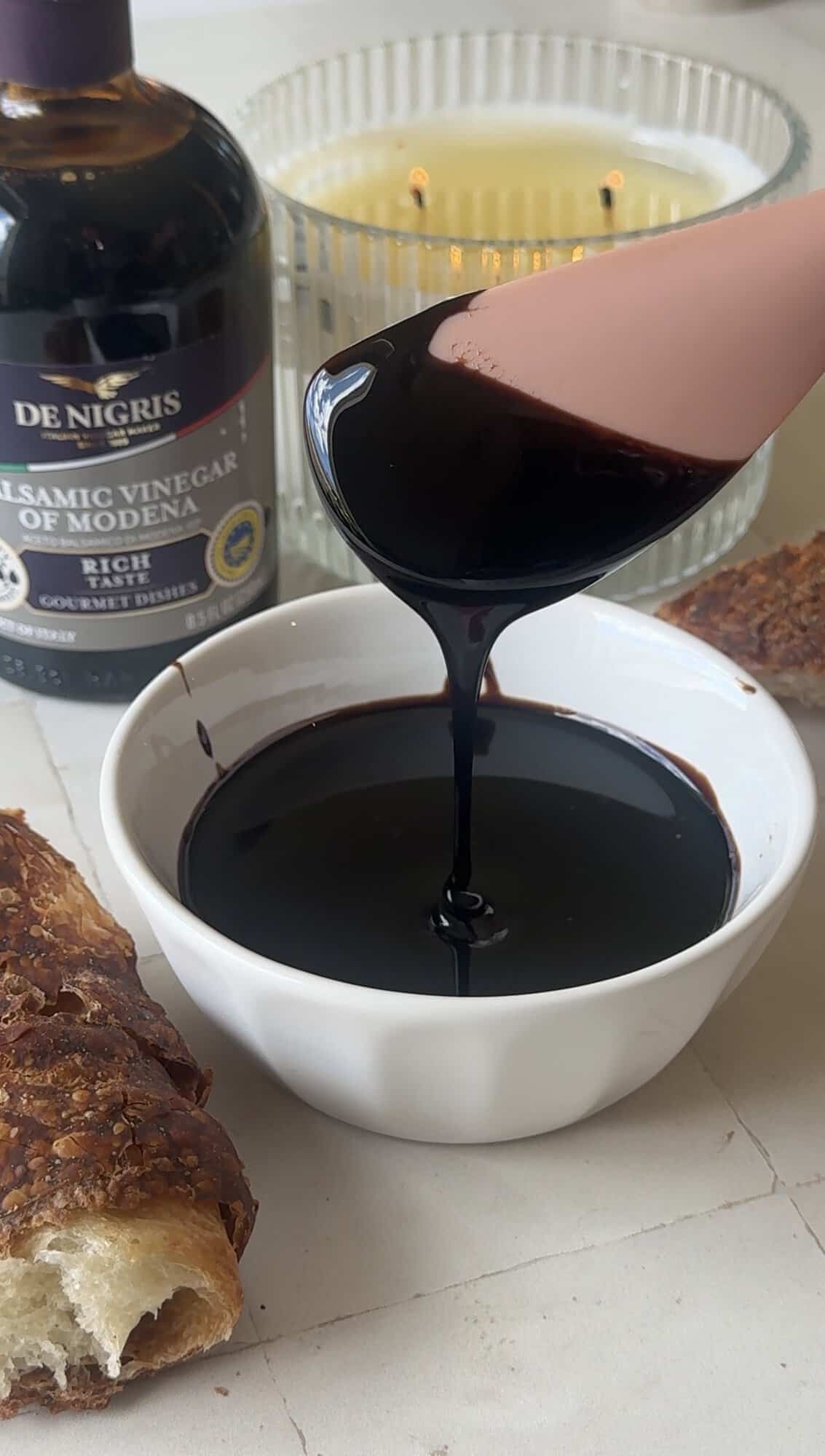
Balsamic glaze is balsamic vinegar that’s been simmered until it reduces and thickens into a syrup. As the water cooks off, the flavor concentrates, the sharp acidity mellows, and the natural sweetness comes forward. A little brown sugar helps it thicken faster and gives it that glossy, drizzle ready texture you see on restaurant plates.
Balsamic Glaze vs. Balsamic Reduction
You’ll see these names used interchangeably, and they’re very close. A balsamic reduction is usually just balsamic vinegar simmered on its own until thick. A balsamic glaze often includes a sweetener, like the brown sugar here, which makes it a little sweeter, glossier, and quicker to thicken. If you want a pure balsamic reduction, you can skip the sugar and simmer a bit longer (see the FAQ below)
Balsamic Glaze Ingredients
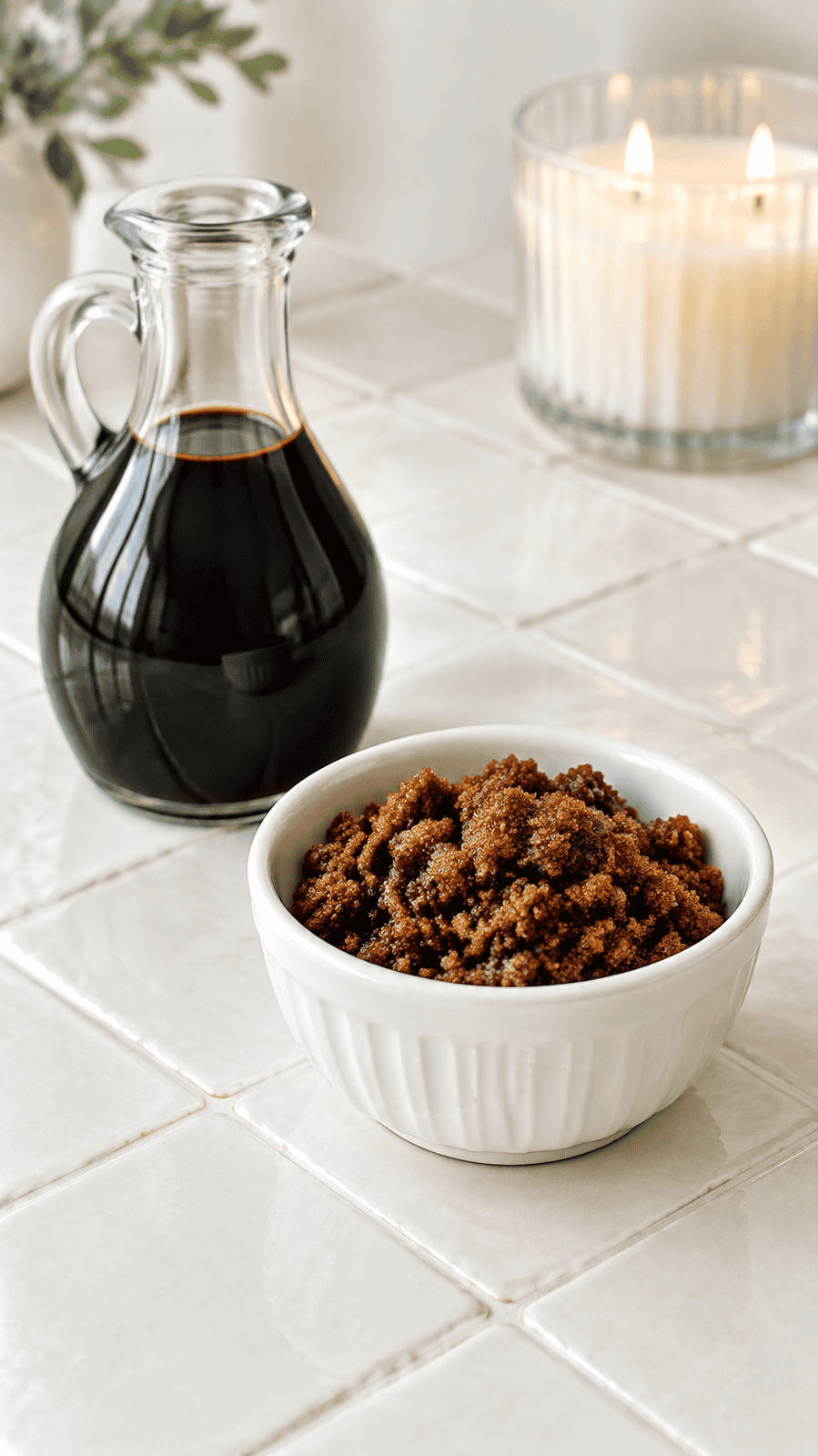
- Balsamic vinegar: Use a good-quality balsamic you’d enjoy on its own. Since it’s the main flavor, a better vinegar makes a noticeably better glaze. Look for one from Modena if you can.
- Brown sugar: Light or dark both work. Dark brown sugar gives a deeper molasses note, while light brown sugar keeps the flavor a little brighter.
Find the exact measurements in the recipe card below.
How to Make Balsamic Glaze
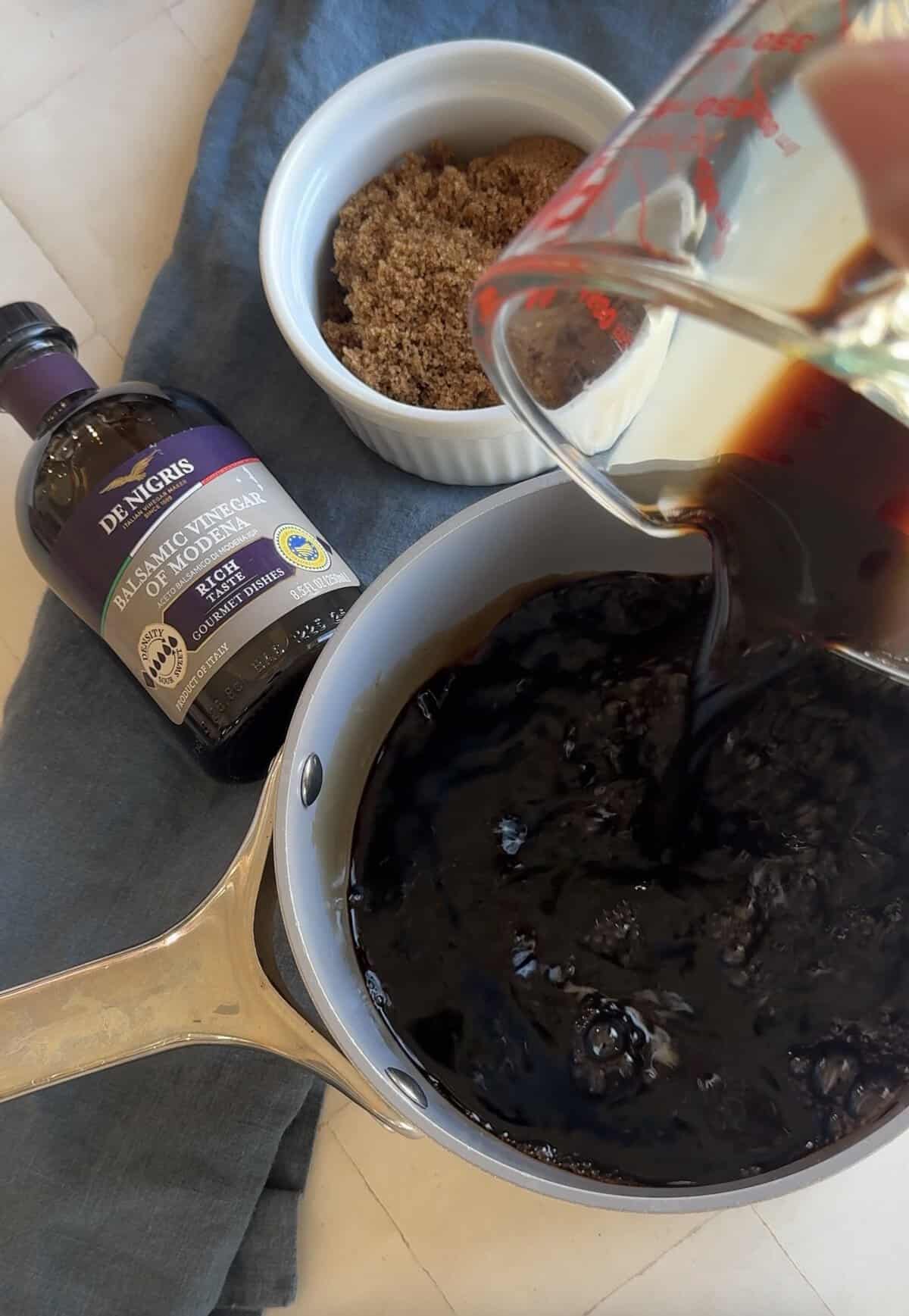
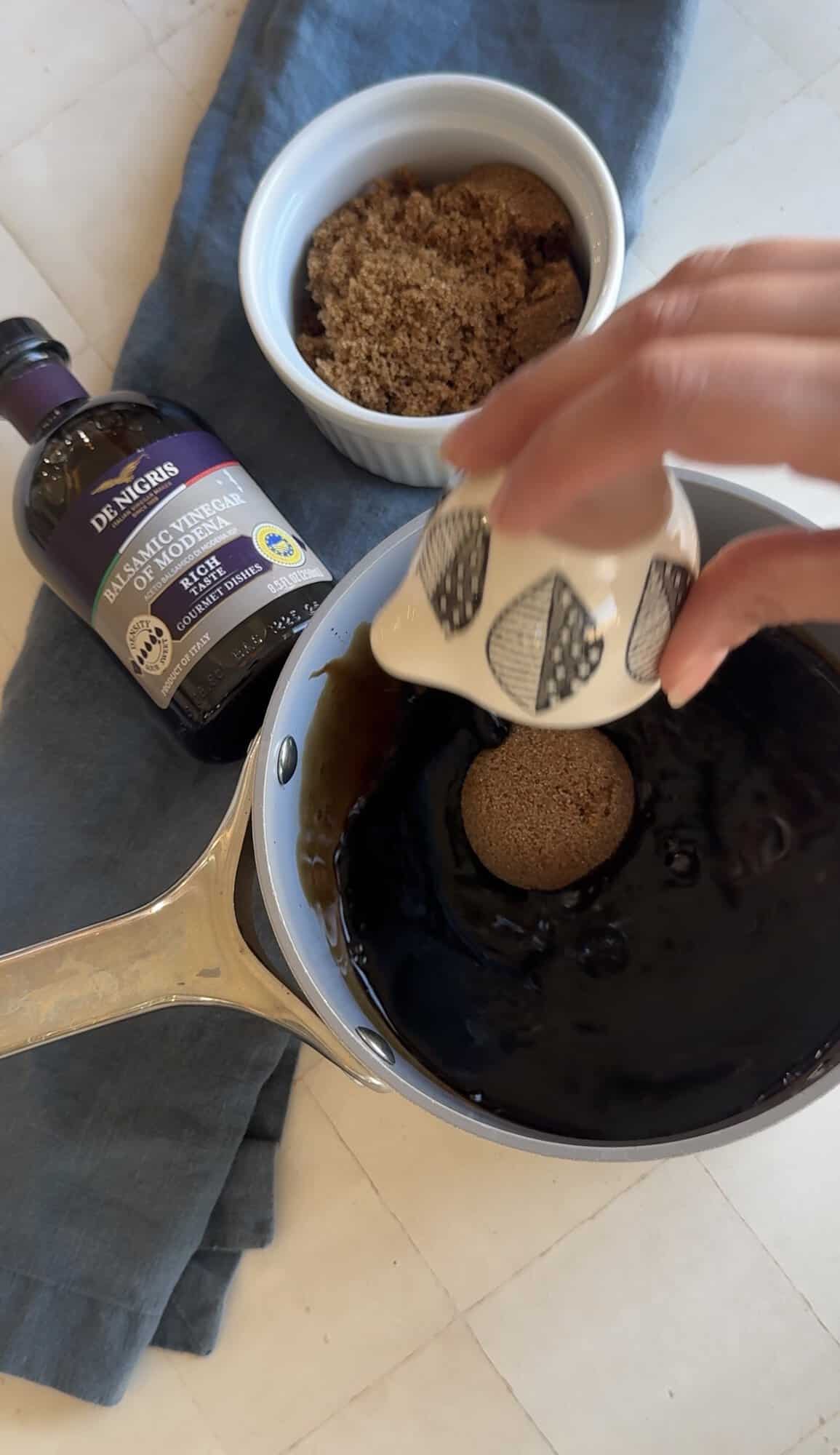
Step 1, combine: Add the balsamic vinegar and brown sugar to a small saucepan and whisk until the sugar starts to dissolve.
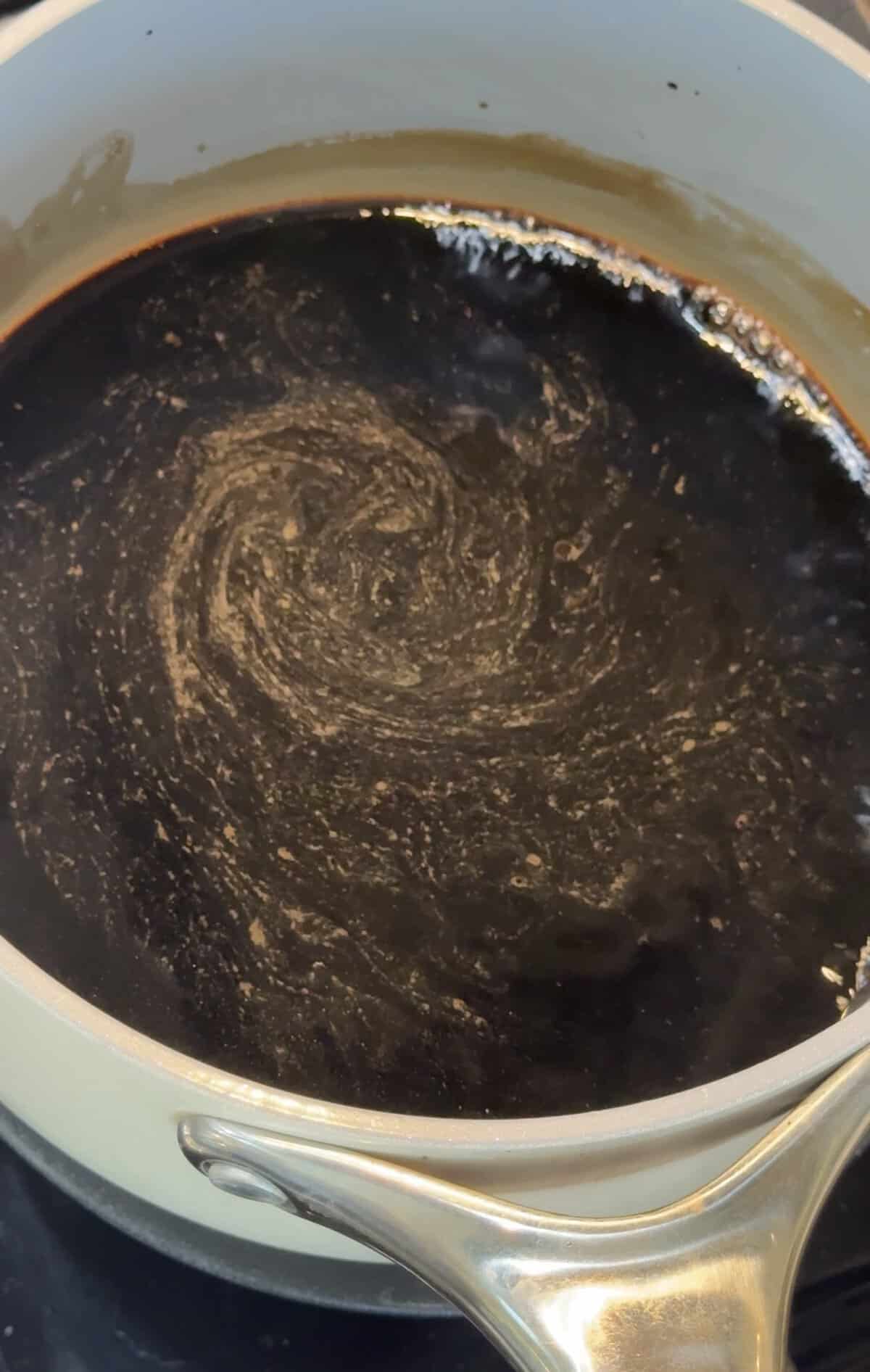
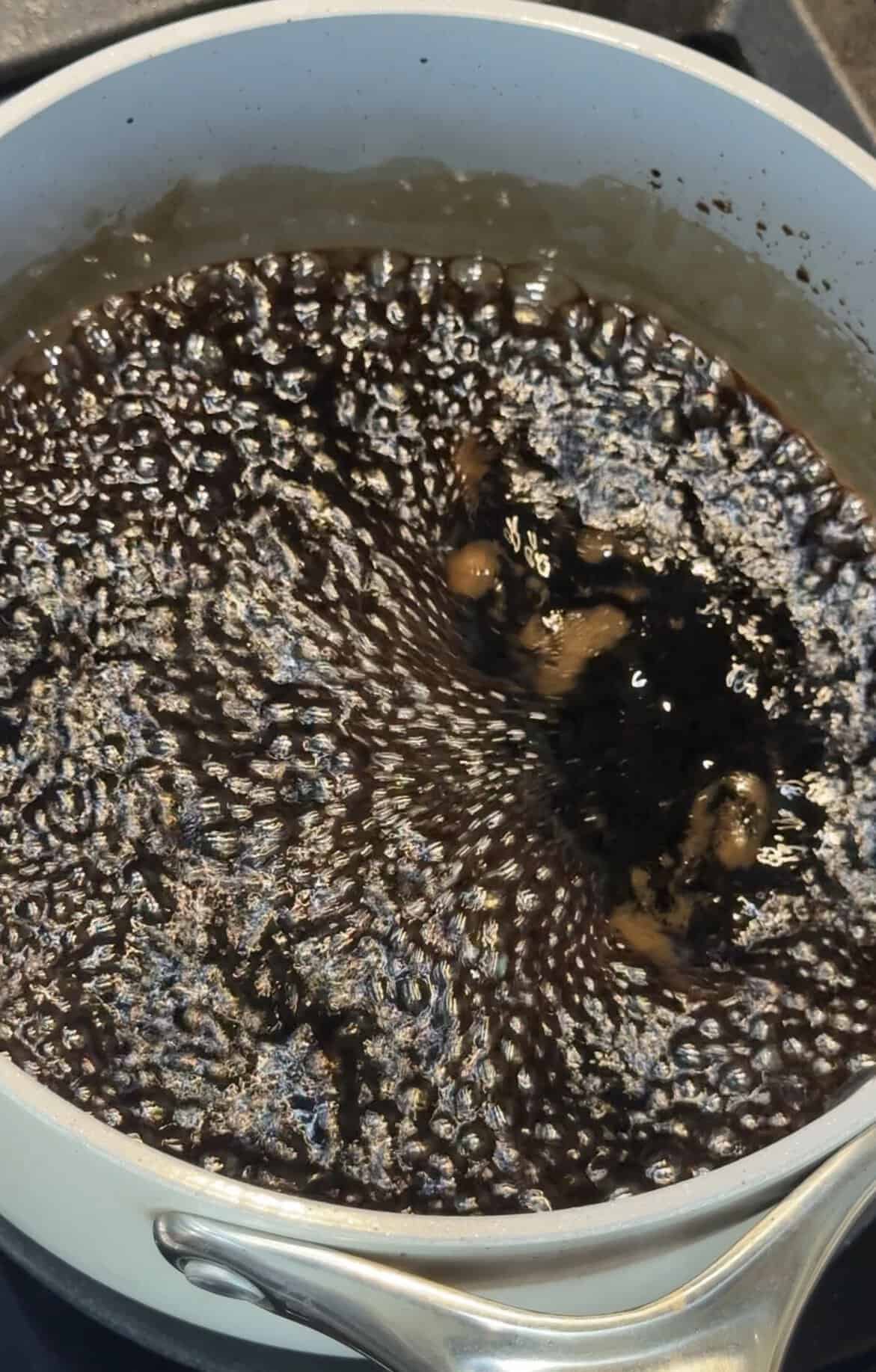
Step 2, bring to a boil: Heat over medium until the mixture just comes to a boil, stirring so the sugar doesn’t stick to the bottom.
Step 3, simmer and reduce: Lower the heat and let it gently simmer, stirring occasionally, for about 10 to 15 minutes. It’s ready when it has reduced by about half and coats the back of a spoon.
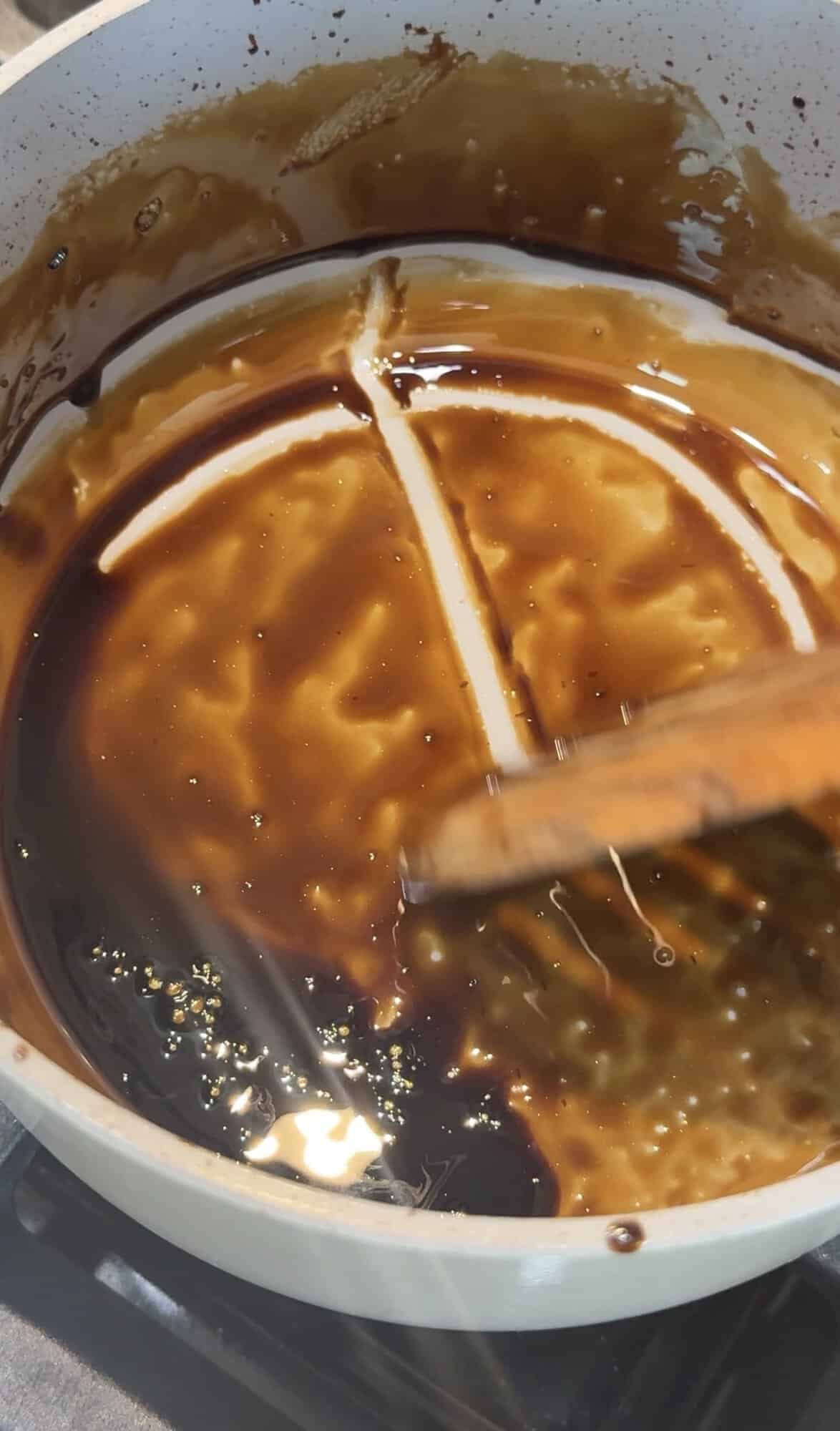
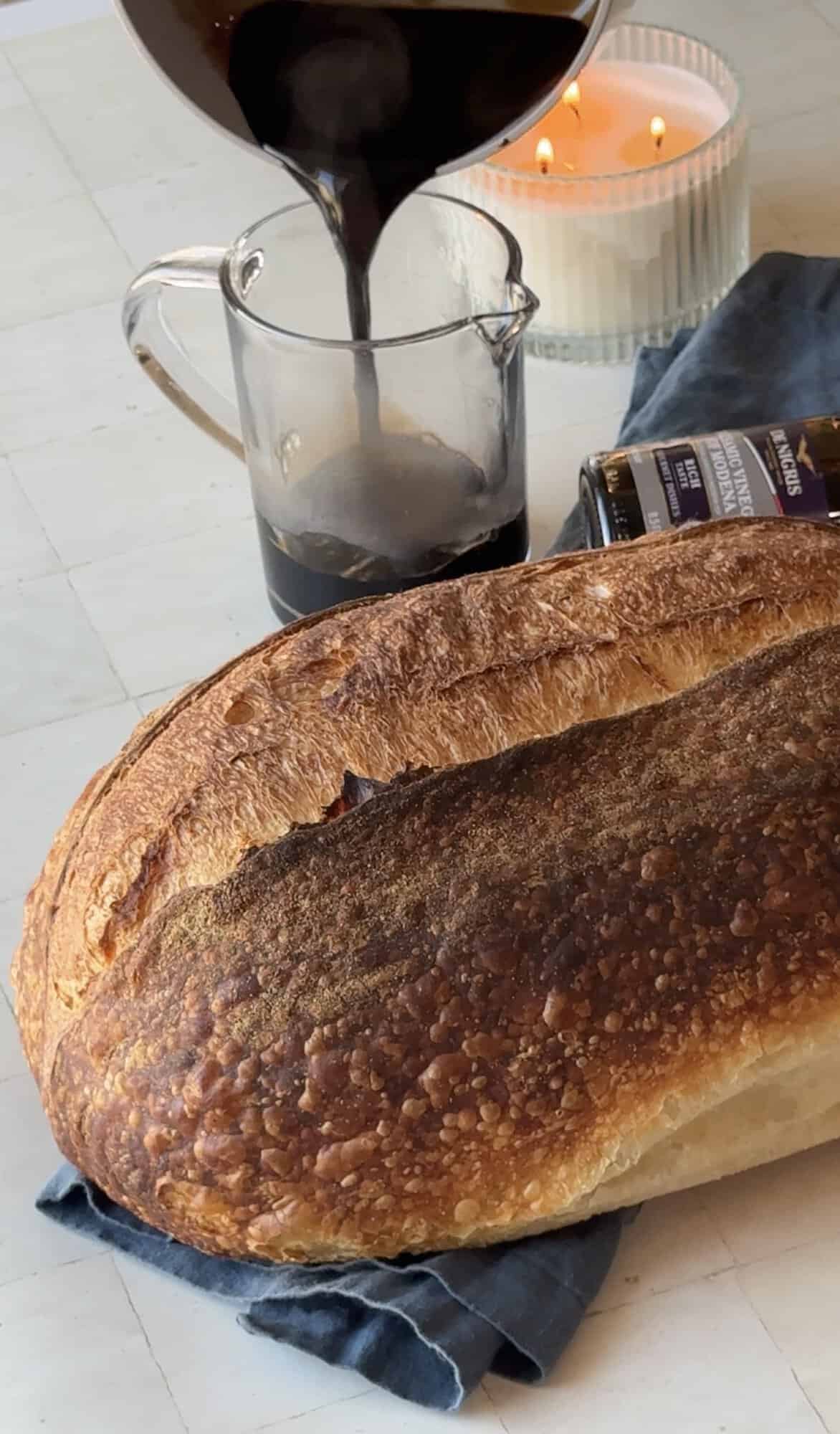
Step 4, cool: Take it off the heat and let it cool completely. The glaze keeps thickening as it cools, so don’t worry if it looks a little thin in the pan.
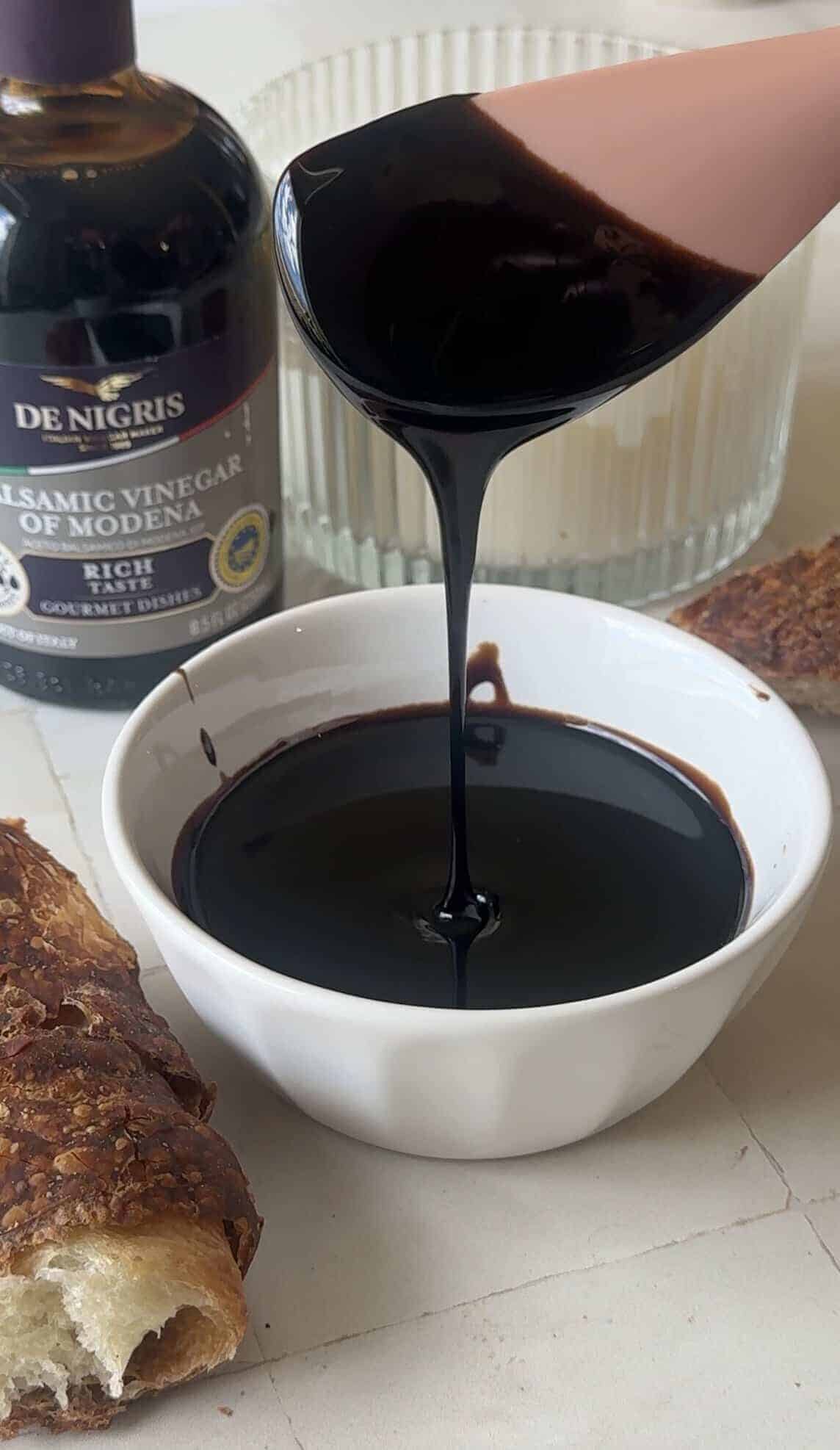
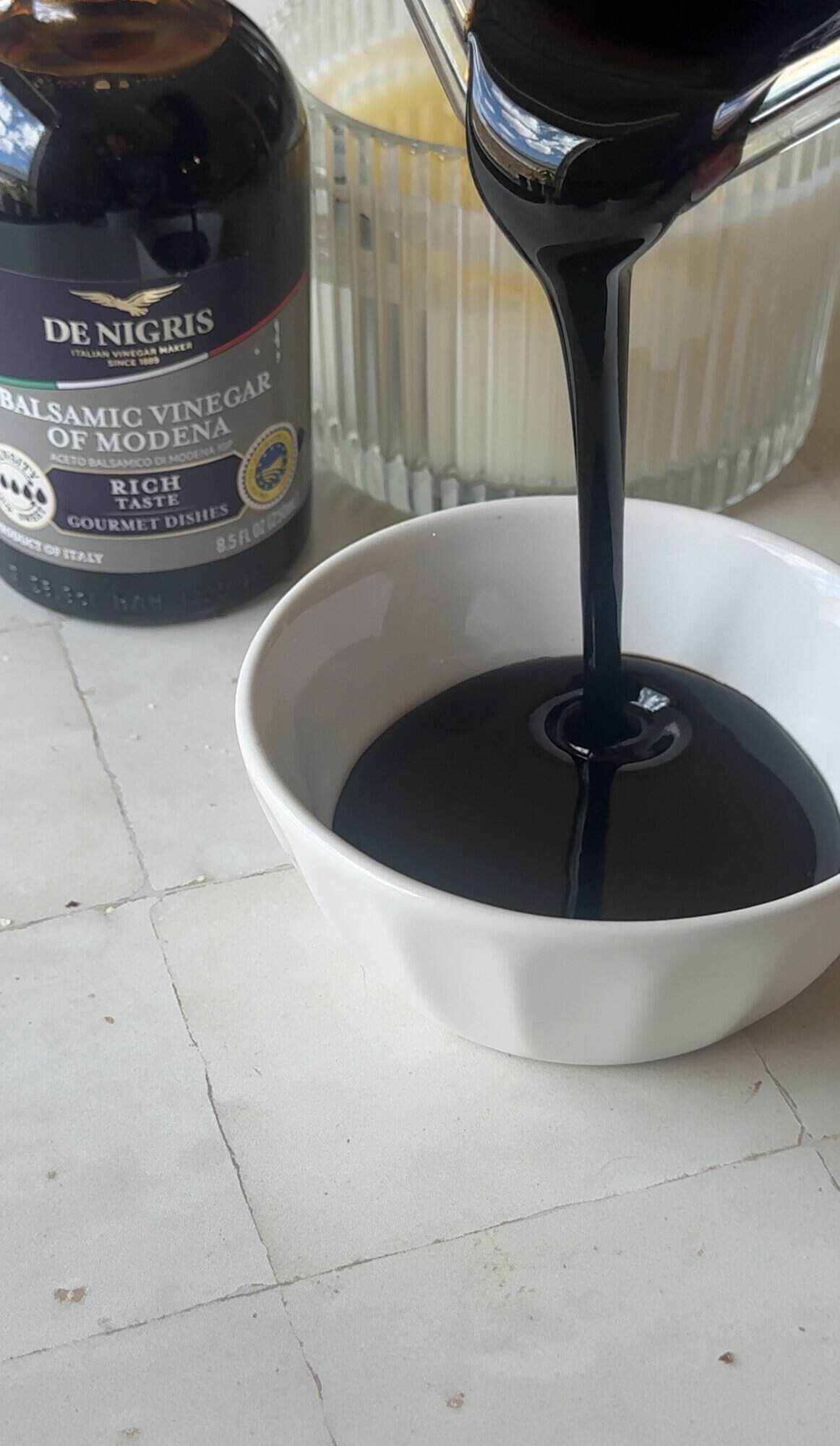
Step 5, store: Pour it into a clean glass jar or squeeze bottle and keep it in the fridge.
Tips for the Best Balsamic Glaze
- Keep it at a gentle simmer: A hard boil can scorch the sugar and make the glaze bitter.
- Pull it early: If it coats a spoon in the pan, it’s done. Cook it too long and it’ll turn sticky and hard once it cools.
- Open a window: Simmering vinegar has a strong smell. Turn on the vent fan, and the smell clears quickly.
- Test it on a cold plate: Drop a little on a chilled plate and run your finger through it. If the line holds, it’s ready.
How to Use Balsamic Glaze
This is where homemade balsamic glaze really earns its spot in your fridge. A little drizzle goes a long way.
- Caprese and fresh salads: Drizzle it over my cucumber caprese salad for that classic tomato, mozzarella, and basil combo with a sweet-tangy finish.
- Pasta salads: Add a light drizzle over my orzo salad with pesto and feta right before serving.
- Roasted Brussels sprouts: Finish my balsamic Brussels sprouts with almonds and goat cheese or my roasted Brussels sprouts with pomegranate vinaigrette with a swirl of glaze.
- Chicken dinners: Spoon a little over my balsamic chicken thighs and green beans or my honey Dijon chicken thighs for an extra glossy, tangy finish.
- Bread and appetizers: Swirl it into my Italian bread dipping oil with olives and balsamic for a thicker, sweeter balsamic swirl.
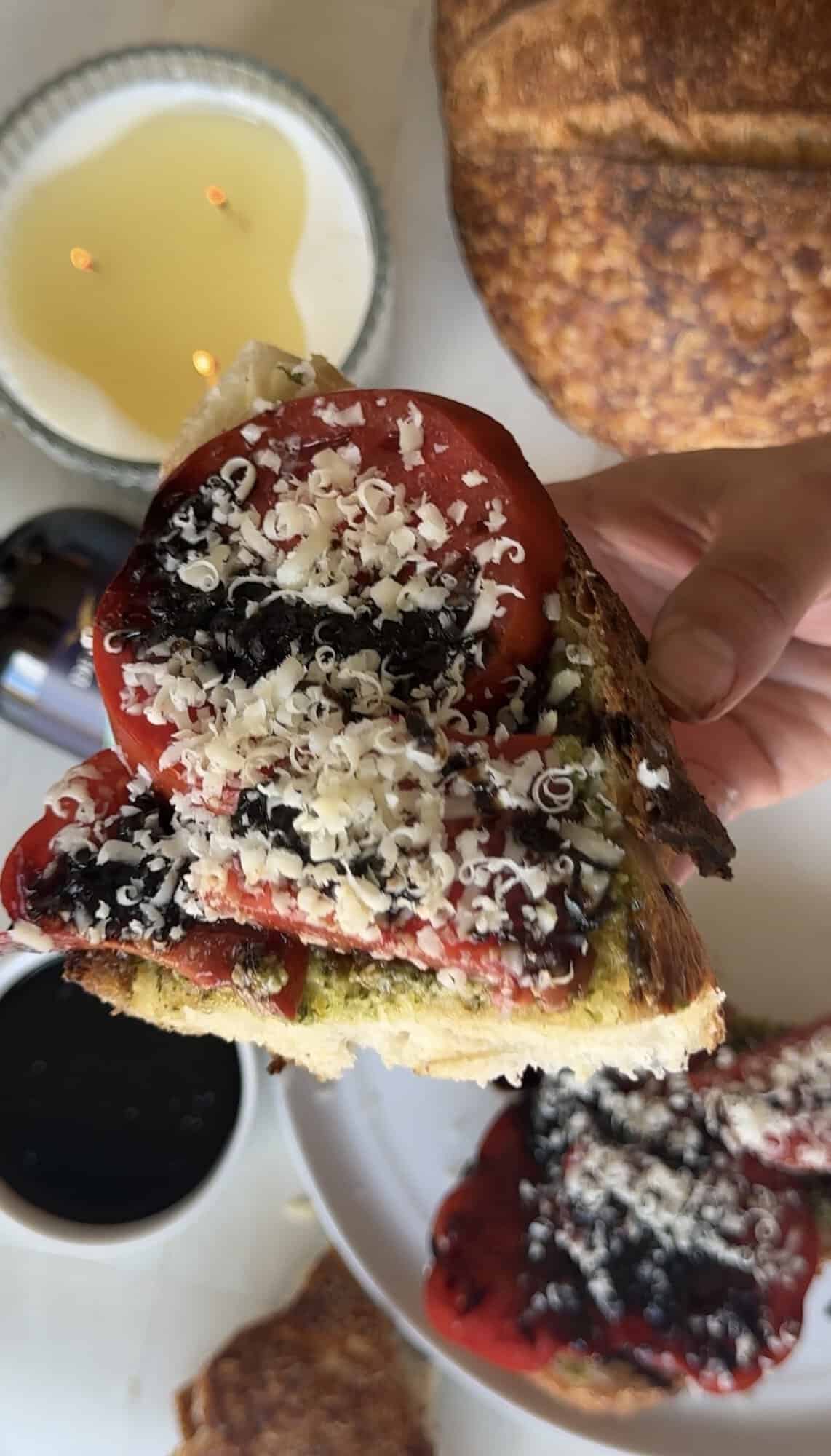
- Breakfast toast: Drizzle it over avocado toast, ricotta toast with strawberries, or toast spread with my whipped feta dip and sliced tomatoes.
- Fruit and dessert: Try it on fresh strawberries, grilled peaches, or a scoop of vanilla ice cream.
How to Store Homemade Balsamic Glaze
Let the glaze cool completely, then store it in an airtight glass jar or squeeze bottle in the refrigerator for up to 1 month. It will firm up in the fridge, so let it sit at room temperature for 10 to 15 minutes, or set the jar in warm water, to loosen it before drizzling.
Balsamic Glaze FAQs
How long does homemade balsamic glaze last?
Stored in an airtight container in the fridge, homemade balsamic glaze keeps for up to 1 month. If it ever smells off, grows mold, or looks cloudy, toss it.
Why is my balsamic glaze too thick?
It was likely cooked a little too long. Warm it gently over low heat and stir in a teaspoon or two of balsamic vinegar or water until it loosens.
Why is my balsamic glaze too thin?
It needs more time on the stove. Return it to a gentle simmer for a few more minutes, and remember that it thickens more as it cools.
Can I make balsamic glaze without sugar?
Yes. Simmer the balsamic vinegar on its own to make a classic balsamic reduction. It takes longer to thicken and will be tangier, but it’s just as delicious.
Is balsamic glaze the same as balsamic vinegar?
Not quite. Balsamic glaze starts as balsamic vinegar, but it’s simmered down into a thicker, sweeter, less acidic syrup. Use the vinegar for dressings and marinades, and the glaze for drizzling and finishing.
Easy Balsamic Glaze
Ingredients
Instructions
- 1 cup good quality balsamic vinegar
- 1/3 cup brown sugar, light or dark
- Instructions
- Add the balsamic vinegar and brown sugar to a small saucepan and whisk to combine.
- Bring to a boil over medium heat, stirring so the sugar dissolves.
- Reduce the heat to low and simmer, stirring occasionally, for 10 to 15 minutes, until reduced by about half and the glaze coats the back of a spoon.
- Remove from the heat and let cool completely. The glaze will continue to thicken as it cools.
- Transfer to an airtight glass jar or squeeze bottle and refrigerate.
Nutrition
Notes
- Storage: Keep refrigerated in an airtight container for up to 1 month. Let it sit at room temperature for 10 to 15 minutes before using.
- Too thick: Warm gently and stir in 1 to 2 teaspoons of balsamic vinegar or water.
- Too thin: Simmer a few minutes longer. It thickens as it cools.
- Sugar-free option: Skip the brown sugar for a classic balsamic reduction. Plan on a longer simmer.
- Simmer gently: A hard boil can burn the sugar and make the glaze bitter.