Sango de Camarónes
Sango de Camaron is one of those dishes that wraps you up the second you start cooking it. Creamy grated green plantains simmer slowly with aromatics, fresh shrimp stock, achiote oil, and cilantro. The result is a thick, porridge-like stew that’s earthy, comforting, and full of coastal Ecuadorian flavor.
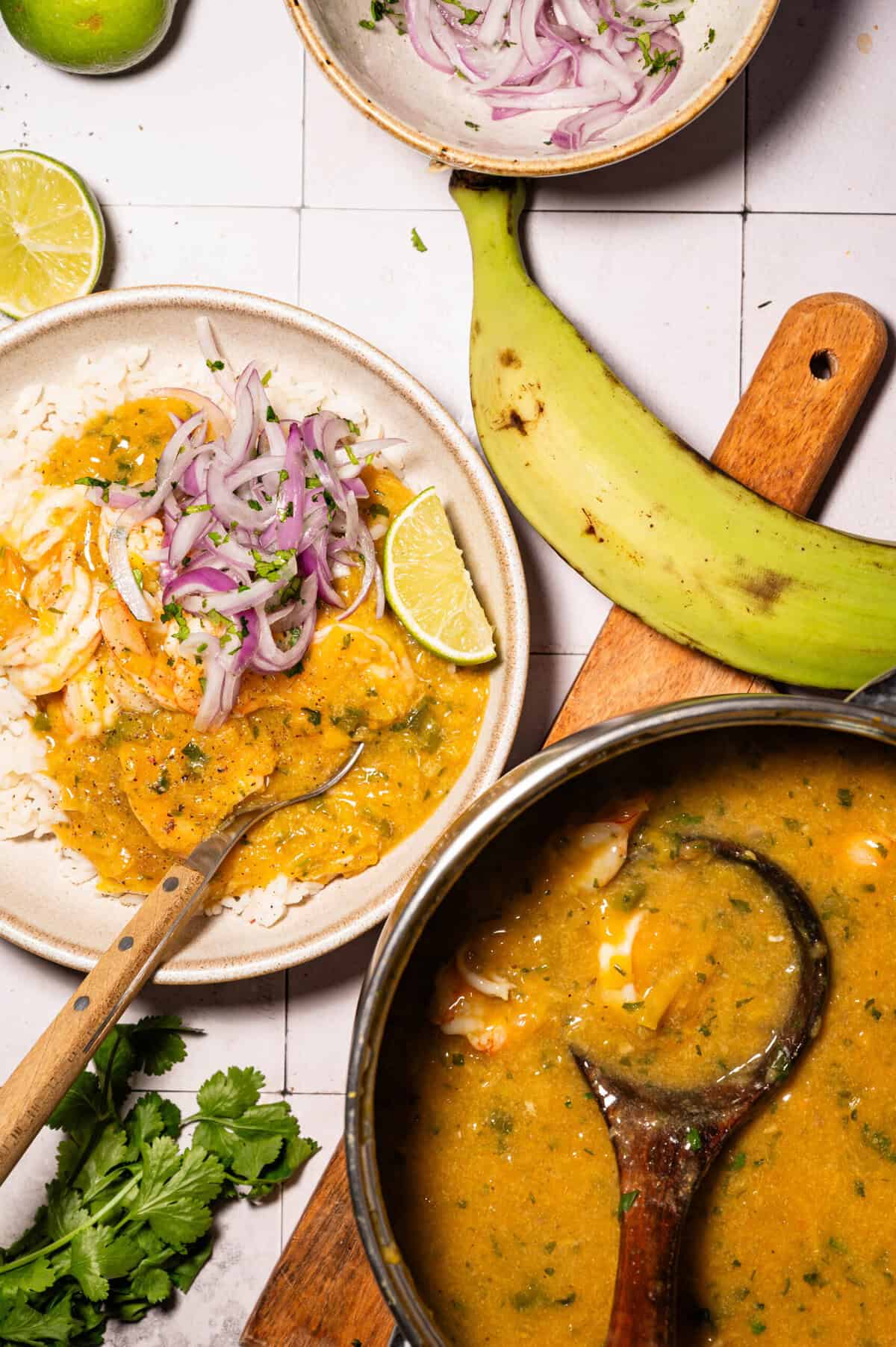
If you love dishes that feel rustic, nourishing, and deeply flavorful, this is one you’ll want to make on repeat.
Before You Get Started
- Use very green plantains, yellow or spotted plantains won’t grate properly and won’t thicken the stew.
- Do not skip making shrimp stock from the shells; it’s what gives the stew its authentic base.
- Sango thickens a lot as it cooks, so keep broth on hand and adjust the texture as needed.
- The pickled red onions are not optional, they brighten the whole bowl.
What You Need to Make Sango de Camaron
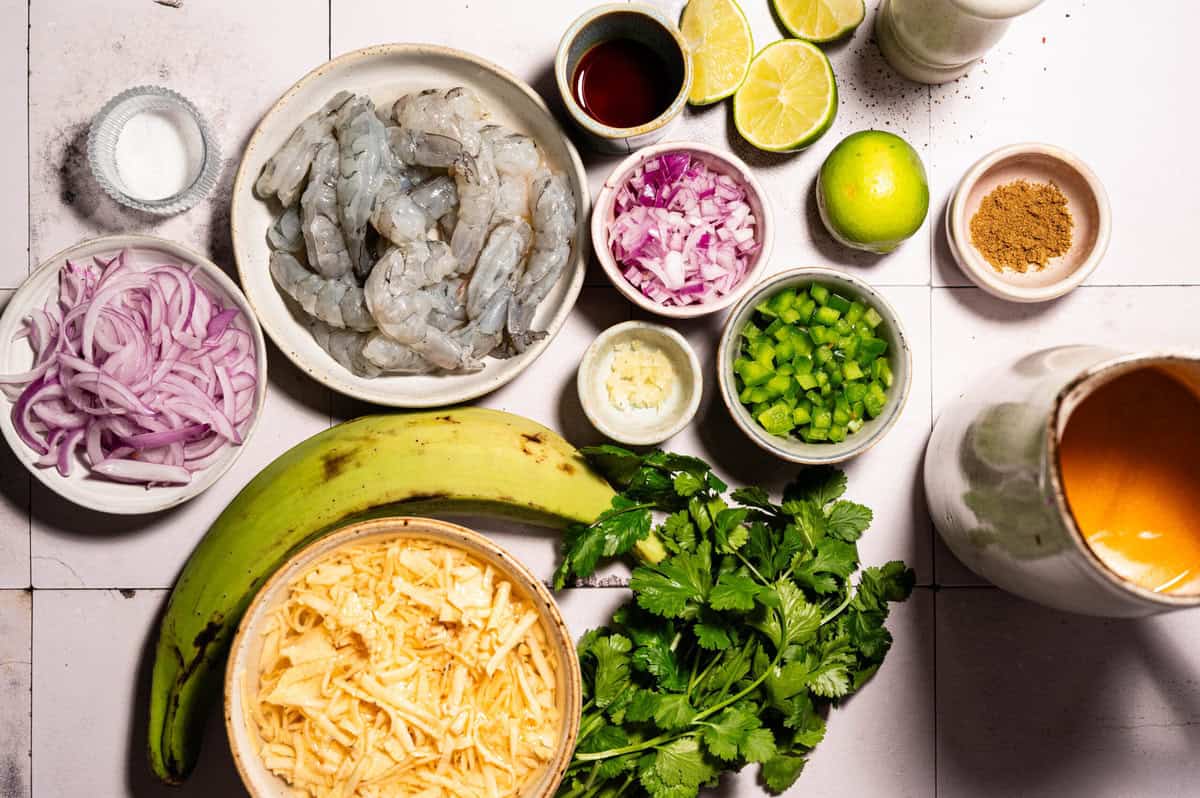
- Green plantains – Grated and simmered into the broth, they’re what thickens the stew into its signature creamy, porridge-like texture.
- Shrimp (shell-on) – The shells are boiled first to make a flavorful stock, then the shrimp themselves are added back in at the end to stay tender.
- Green bell pepper – Sautéed with the aromatics to build a savory, slightly sweet base for the stew.
- Red onions (one diced, one for pickling) – The diced onion softens into the stew’s base, while the second is quick-pickled with lime juice to add brightness on top.
- Garlic – Sautéed first in the achiote oil to build the aromatic foundation of the dish.
- Fresh cilantro – Stirred in at the end and used as a garnish for a fresh, herbal finish.
- Achiote oil – Gives the stew its warm color and adds a distinct earthy, slightly peppery flavor traditional to Ecuadorian cooking.
- Cumin – Adds warm, earthy depth to the seasoning of the aromatics.
- Limes -Their juice is essential for pickling the red onions that top each bowl.
- Salt & pepper
- White rice (for serving) – Serves as the base the stew is ladled over, rounding the dish out into a complete meal.
How to Make Sango de Camaron
1. Make the Shrimp Stock
Boil the shrimp in water until pink. Remove the shrimp, peel and devein them, and save the broth — this will be your flavorful cooking liquid.

2. Prep the Plantains
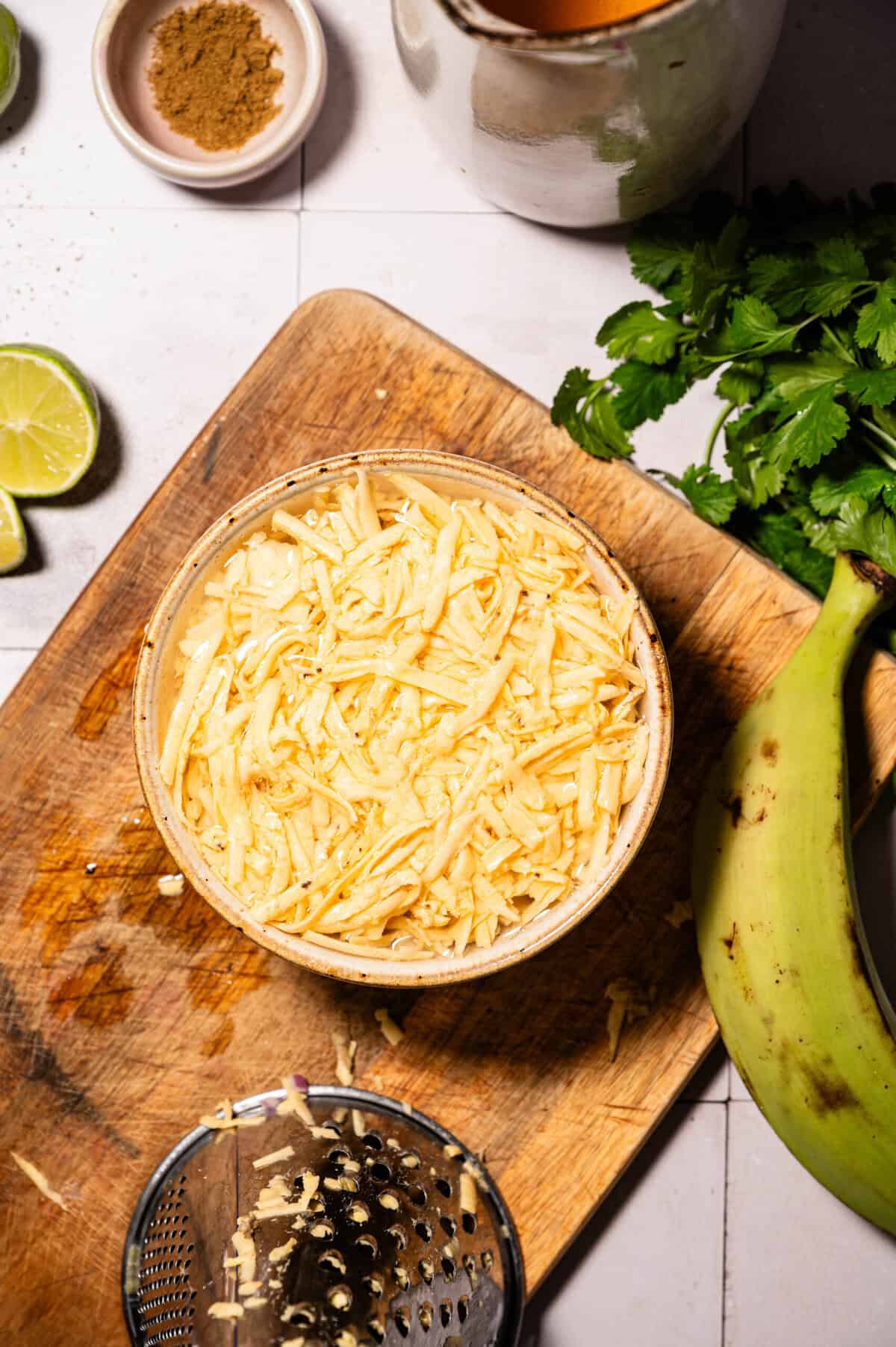
Grate the green plantains and immediately mix with a little warm shrimp broth to prevent browning and keep the mixture creamy.
3. Build the Base
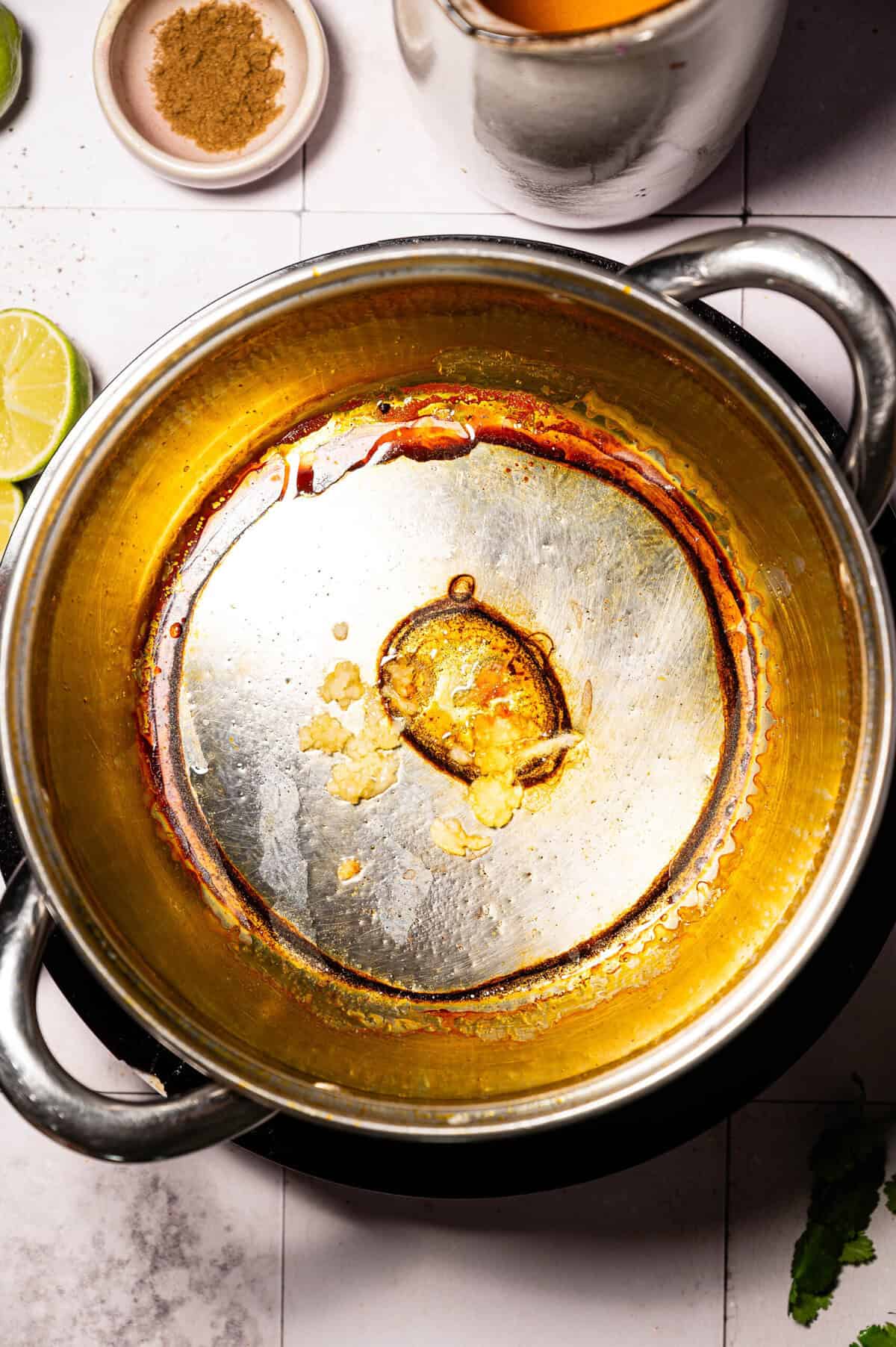
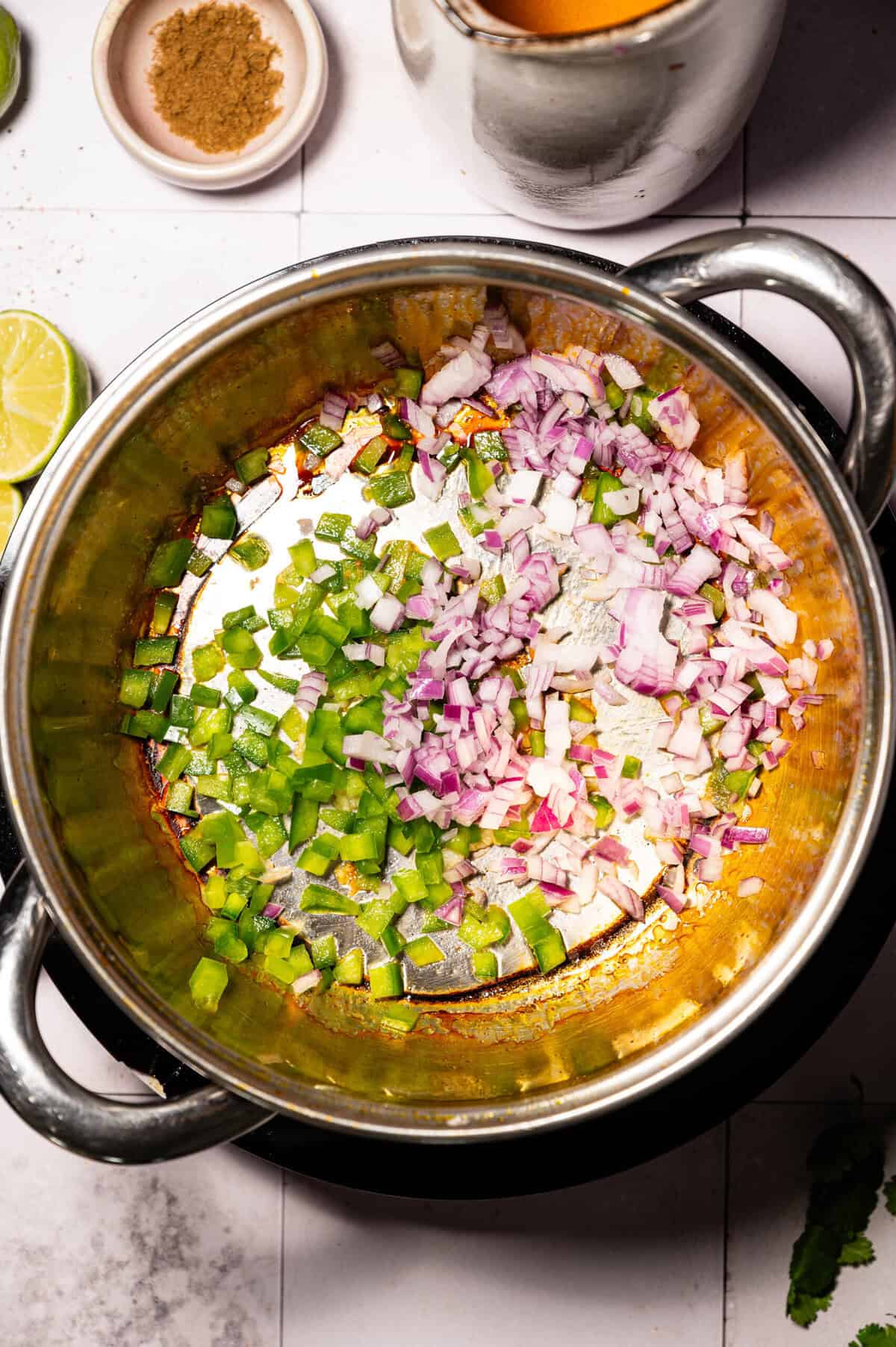
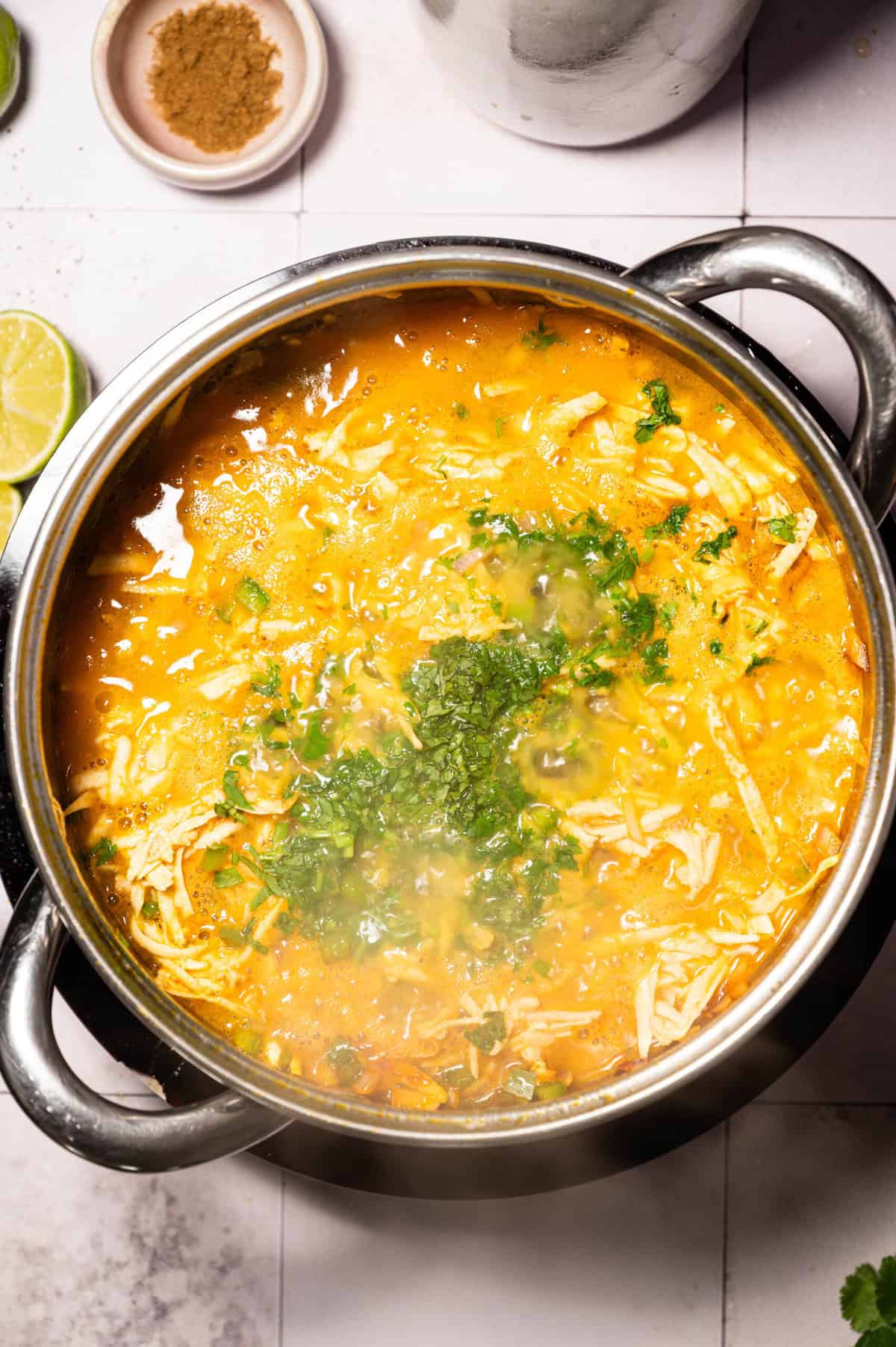
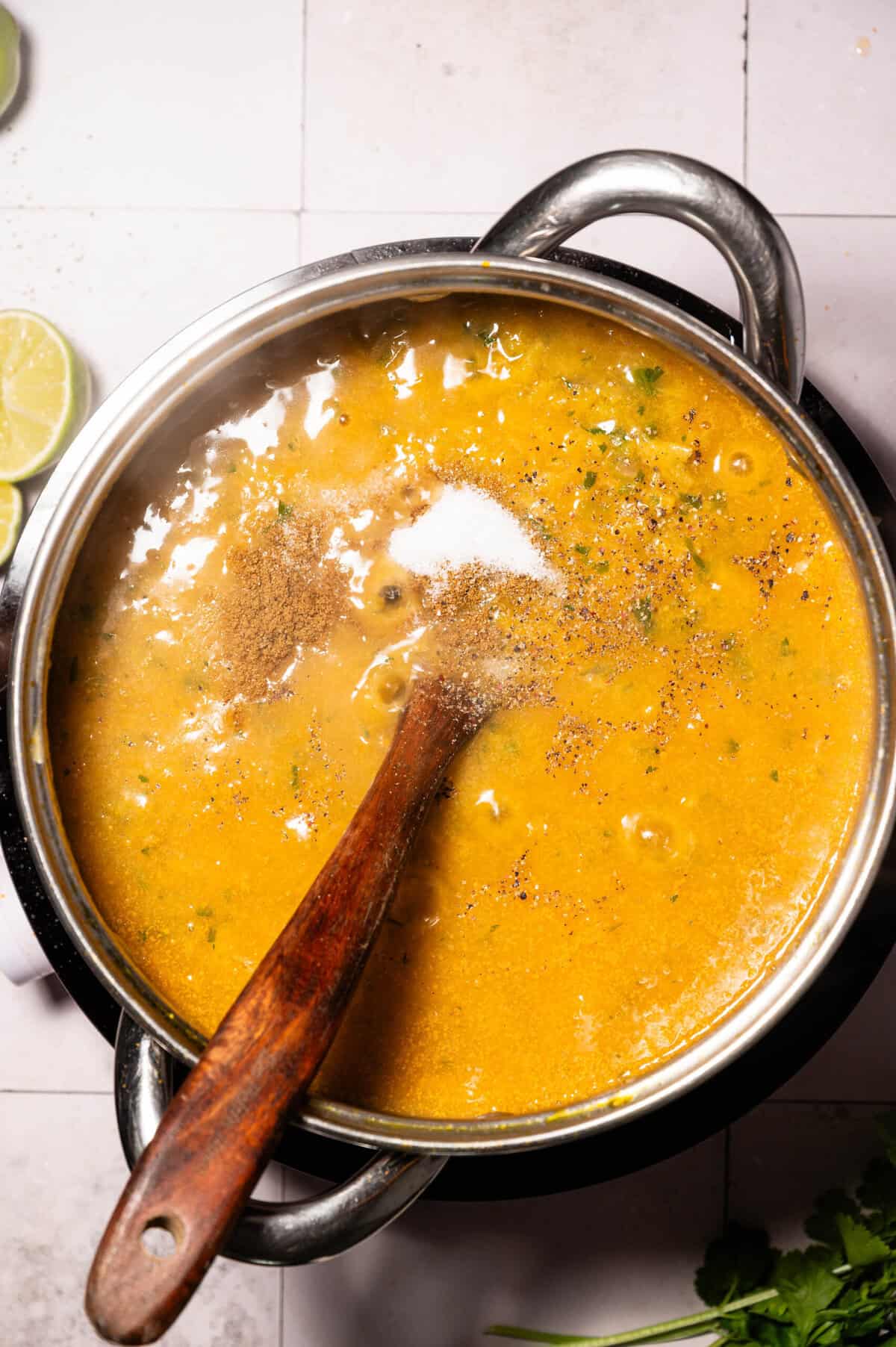
Warm achiote oil in a pot. Sauté garlic until fragrant, then add diced onion and bell pepper. Season with salt, pepper, and cumin. Cook until softened.
4. Add the Plantains
Stir in the grated plantain mixture and cook briefly with the aromatics to begin building the body of the stew.
5. Add the Shrimp Broth Slowly
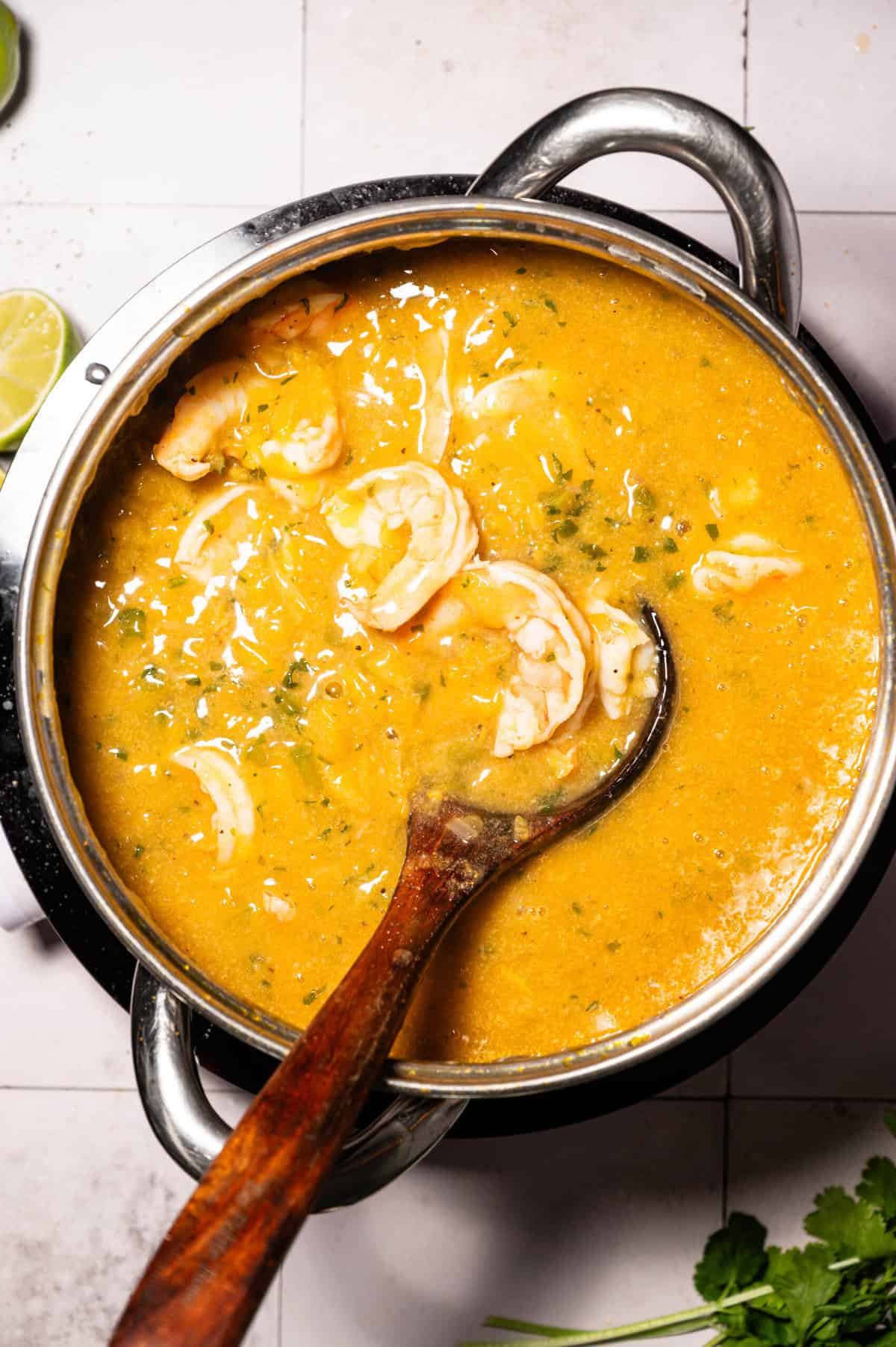
Pour in broth a ladle at a time, stirring continuously. The plantains will absorb liquid quickly — keep adding broth as needed to maintain a thick, creamy consistency.
6. Cook Until Tender
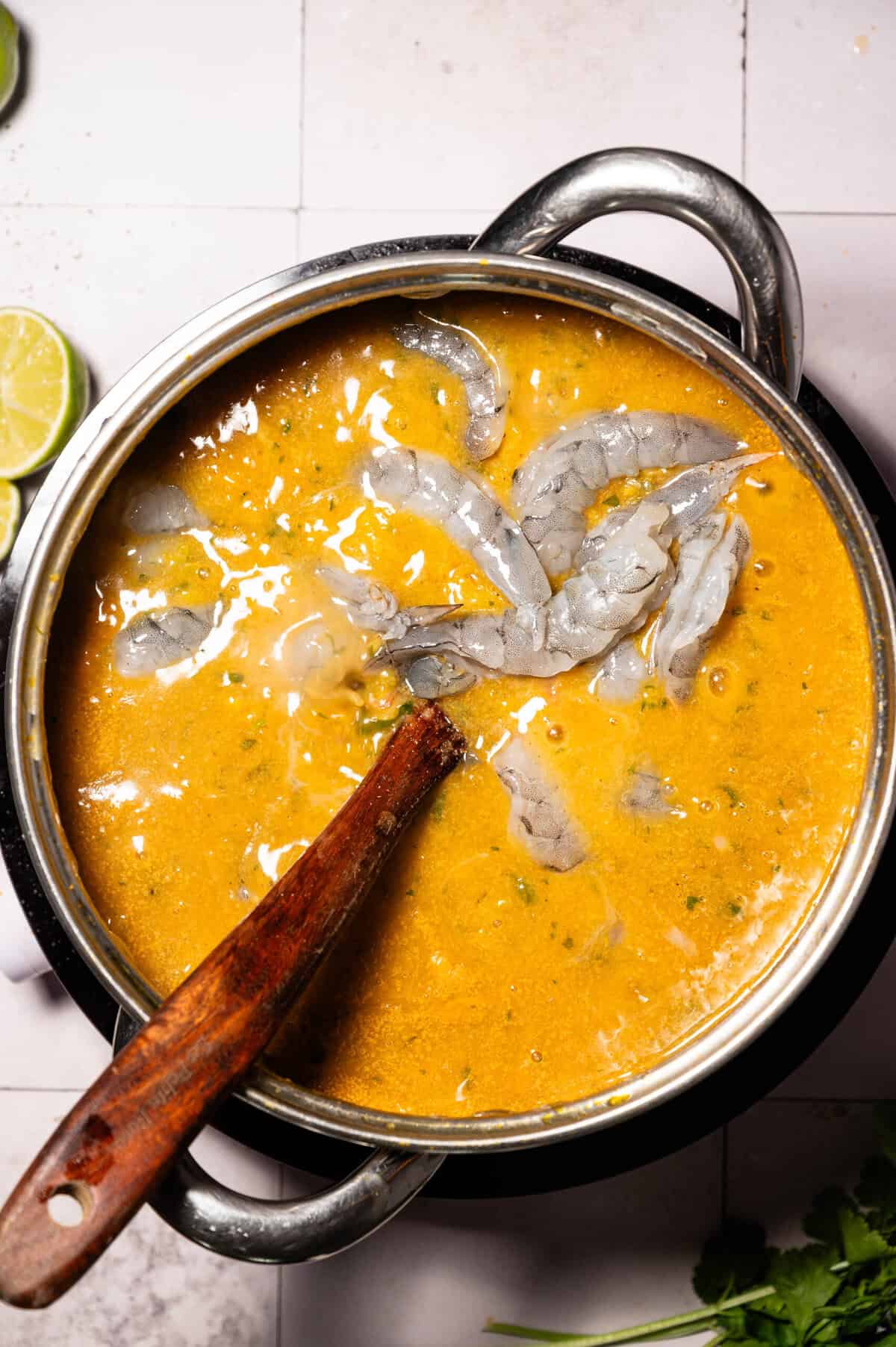
Simmer for about 35–40 minutes, stirring often. The mixture should look porridge-like and smooth.
7. Add the Shrimp
Once the plantains are tender, stir the cooked shrimp back into the pot. Warm gently so they stay tender.
8. Make the Pickled Onions
While the stew cooks, thinly slice a red onion. Rinse, drain, and toss with lime juice, cilantro, salt, and pepper. Let sit to lightly pickle.
9. Finish & Serve
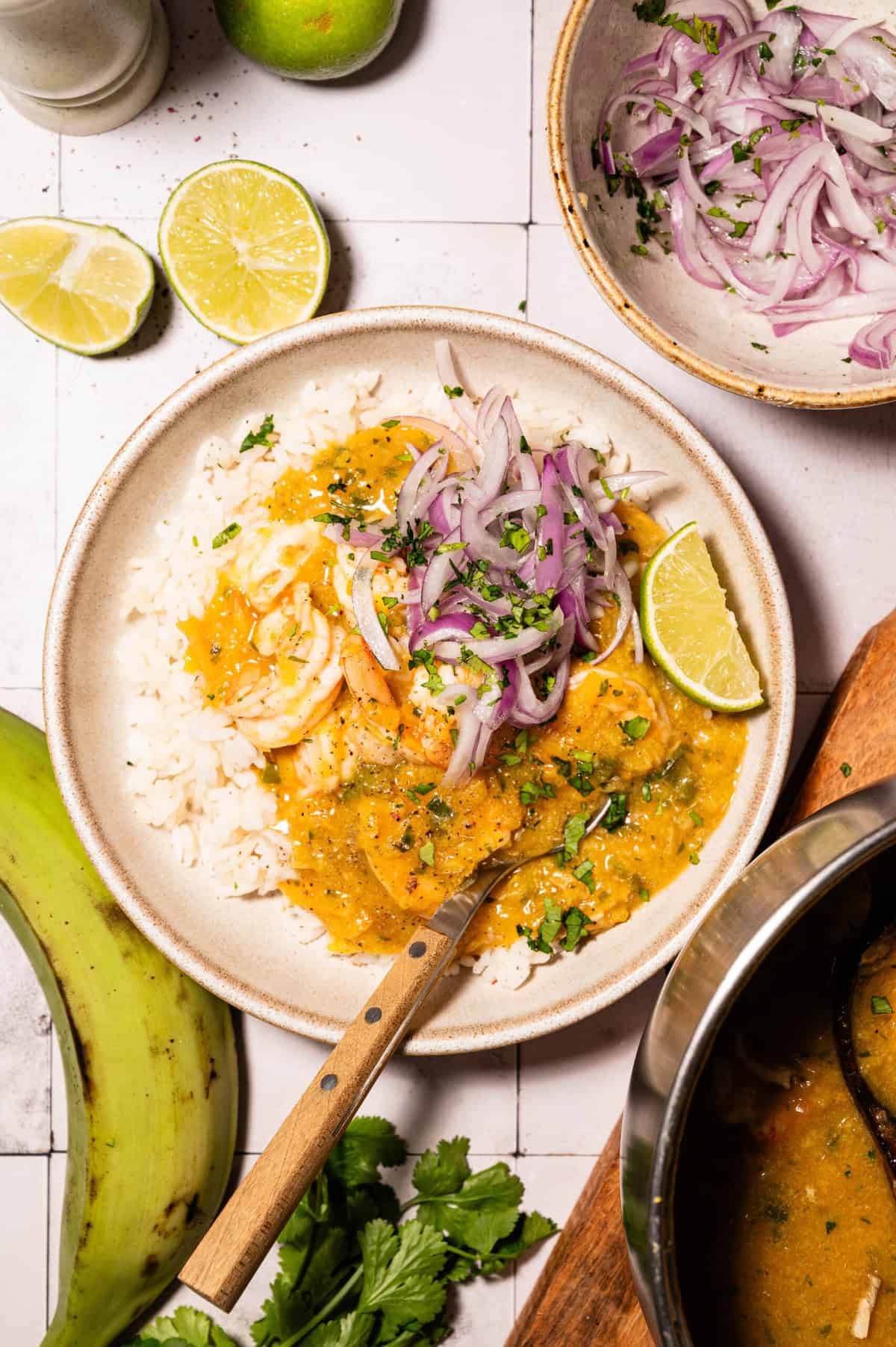
Stir fresh cilantro into the stew, adjust salt and pepper, and serve with hot white rice. Top each bowl with pickled onions and extra cilantro.
Substitutions and Variations
- Achiote oil – If you don’t have it, use a neutral oil (like vegetable or avocado) plus a pinch of annatto powder to mimic the color and flavor.
- Shell on shrimp – Frozen shrimp works fine as long as it’s still shell-on, so you can make the stock. If you only have peeled shrimp, use store-bought shrimp or seafood stock instead.
- Spice it up – Add a diced jalapeño or a splash of hot sauce with the aromatics if you like more heat.
- Make it dairy creamy – A splash of coconut milk stirred in near the end adds extra richness, giving it a slightly different, more tropical profile.
- Adjust the consistency – For a soupier stew, add more broth; for a thicker, more traditional porridge like texture, let it simmer longer or add less liquid.
More Shrimp Recipes
- Shrimp Ceviche
- Shrimp and Mango Ceviche
- Shrimp Rice Paper Bowl
- Bang Bang Shrimp Tacos
- Spice-Rubbed Shrimp Tacos
Commonly Asked Questions
Can I use yellow plantains?
No, only green plantains work. Yellow plantains turn sweet and won’t thicken the stew properly.
Do I have to use achiote oil?
It’s traditional and adds color and flavor. If you don’t have it, use neutral oil plus a pinch of annatto powder.
Can I use frozen shrimp?
Yes! Just make sure they are shell-on so you can still make the stock.
How thick should Sango be?
Think of a loose porridge, thick enough to hold a spoon upright but still creamy.
Does it reheat well?
Yes, but it thickens in the refrigerator. Thin it with a splash of broth or water when reheating.
Sango de Camarón (Ecuadorian Shrimp & Plantain Stew)
Ingredients
Instructions
- Fill a large pot halfway with water and add the shrimp with shells. Cook until just pink, about 3–4 minutes. Remove the shrimp, peel and devein them, and set aside while reserving the cooking broth.
- Grate the three plantains and immediately mix them with about half a cup of the shrimp broth to keep them from browning.
- In a medium pot, heat 1/4 cup of achiote oil over medium-low heat. Add the garlic and cook until fragrant, about 2 minutes.
- Stir in the diced onion and bell peppers, season with salt, pepper, and ¼ teaspoon cumin, and cook for about 4 minutes until softened.
- Add the grated plantain mixture and let it cook with the aromatics for about 2–3 minutes.
- Begin stirring in the shrimp broth, one ladle at a time, making sure the mixture stays creamy. The plantains will absorb broth quickly, so continue adding liquid as needed. Stir often to avoid sticking.
- Cook for 35–40 minutes, until the plantains are tender and the mixture has a smooth, porridge like texture. Once it reaches this consistency, stir the cooked shrimp back in and let them warm gently in the stew for just a few minutes so they stay tender and don’t overcook. Add an salt and pepper to taste here.
- While the stew simmers, thinly slice one red onion and rinse under cold water. Drain well, then place in a bowl with the juice of 1–2 limes, chopped cilantro, salt, and pepper. Toss to combine and let rest to lightly pickle.
- Mix fresh cilantro into the stew just before serving and adjust seasoning with salt and pepper.
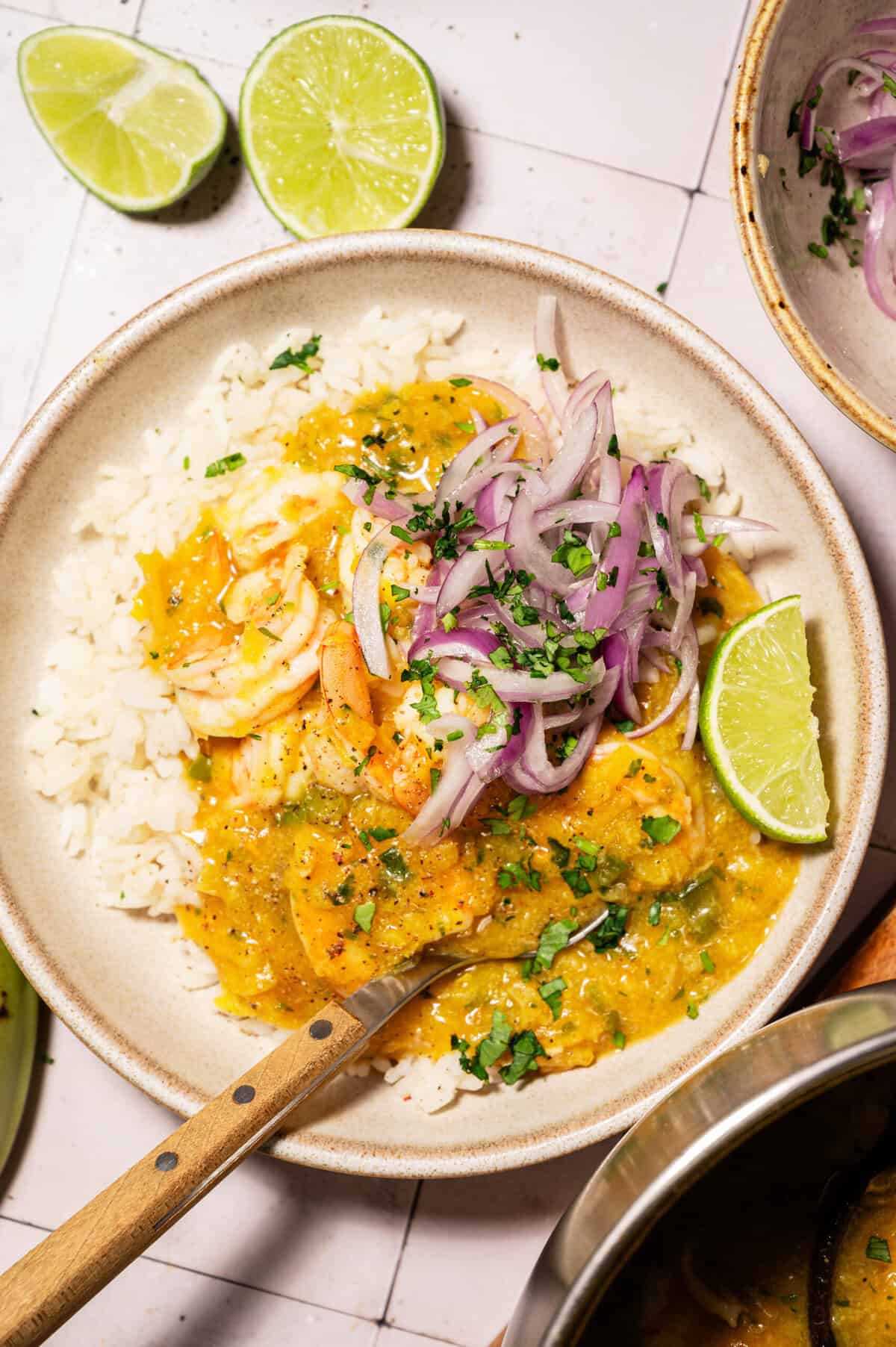
- Serve hot with white rice and top with pickled onions and extra cilantro.
Notes
- Use only green plantains – yellow or ripe plantains turn sweet and won’t grate or thicken the stew properly.
- Shrimp Cooking Tip – Shrimp must be shell-on to make the stock; if using frozen, just make sure the shells are still on. Peeled shrimp only works if you sub in store-bought shrimp or seafood stock.