Perfect Pesto Recipe
This basil pesto recipe is five minutes of blending away from the most versatile sauce in your refrigerator. Fresh basil leaves, pine nuts, garlic, Montego or Parmesan cheese, and a generous pour of extra virgin olive oil blend into a bright green, herbaceous sauce that is infinitely better than anything from a jar. Once you make it yourself, you will not go back.
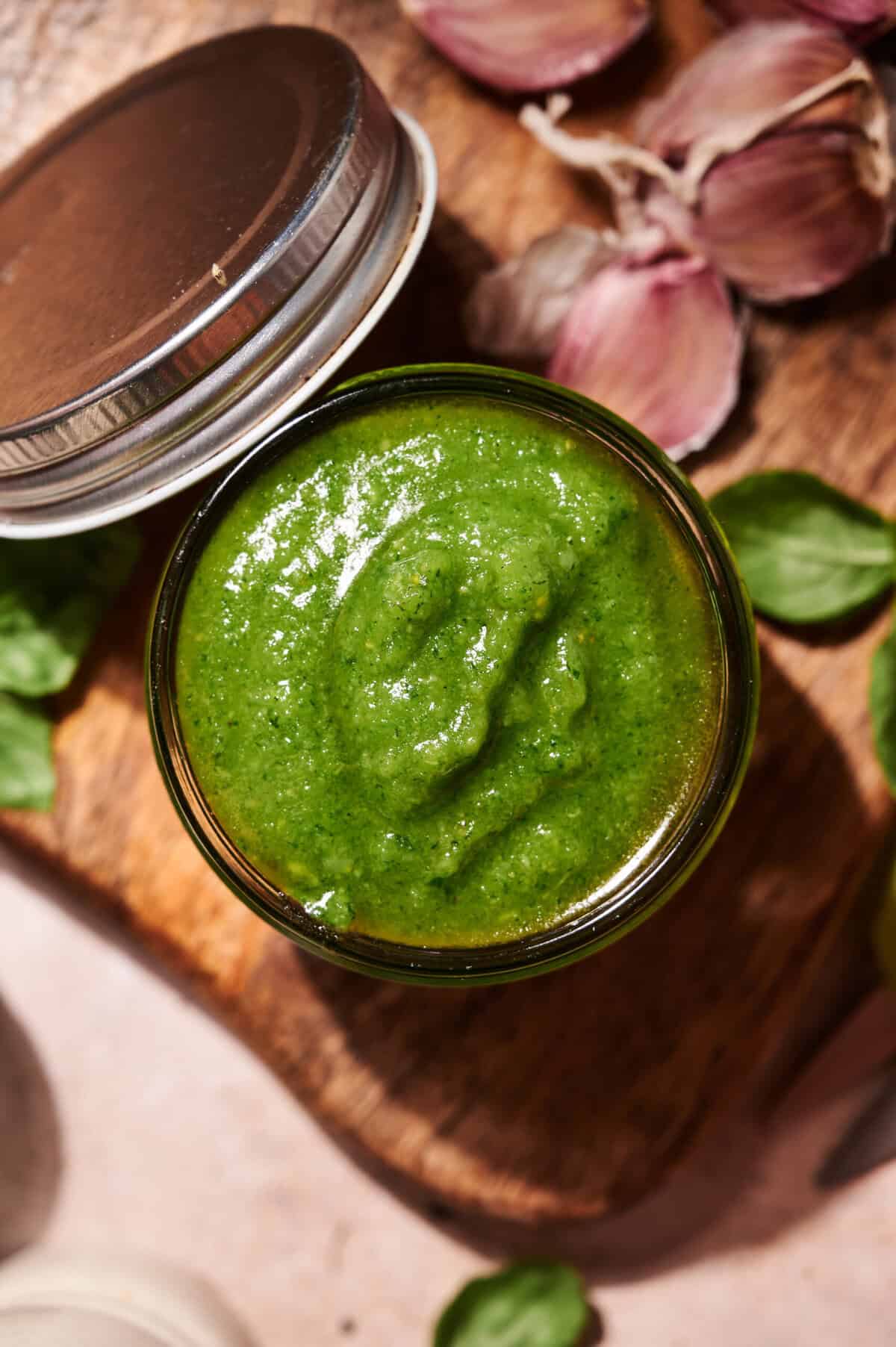
This easy pesto recipe works on pasta, roasted vegetables, grilled chicken, sandwiches, sourdough toast, pizza, and just about anything else you put in front of it.
Why You’ll Love This Basil Pesto Recipe
- Ready in five minutes: Five ingredients and five minutes is the whole thing. No cooking, no special equipment beyond a blender or food processor.
- Better than jarred: Freshly made pesto has a vivid color and a brightness that store-bought versions cannot replicate. The flavor is cleaner, more herbal, and more aromatic.
- A generous batch: This recipe yields about 1 1/2 cups, which is enough to dress a full batch of pasta and still have extra for other uses throughout the week.
- Freezer friendly: It freezes beautifully in ice cube trays so you can pull out a tablespoon or two whenever a dish needs it without planning ahead.
Ingredients Needed for This Basil Pesto Recipe

- Fresh basil leaves: Two packed cups of fresh basil. Use the most fragrant, vibrant green basil you can find. Wilted or yellowing leaves produce a dull, bitter pesto with a muted color.
- Pine nuts: Toasted or raw. Toasting them in a dry skillet over medium-low heat for 3 to 4 minutes until golden deepens their nutty flavor significantly. Watch them carefully as they burn quickly.
- Montego cheese: A firm, aged cheese with a similar profile to Parmesan. Substitute freely with Parmesan Reggiano, Pecorino Romano, or Gruyere. Freshly grated produces a smoother, more evenly incorporated sauce than pre-grated.
- Garlic: Three cloves for a moderately assertive garlic flavor. Reduce to two cloves for a milder result, or increase to four for a more pungent pesto.
- Extra virgin olive oil: A full cup for a loose, pourable pesto. Reduce the amount for a thicker pesto that works well as a spread. Use the best olive oil you have as it is a primary flavor in the finished sauce.
- Salt and freshly ground black pepper: Adjust to taste after blending.
How to Make This Basil Pesto Recipe
Step 1: Prep
If toasting pine nuts, heat them in a dry skillet over medium-low heat, stirring frequently, until golden and fragrant, about 3 to 4 minutes. Let them cool slightly before blending. Wash and thoroughly dry the basil leaves.
Step 2: Blend
Add the pine nuts, basil leaves, grated cheese, and garlic to a blender or food processor. Pulse several times until the ingredients are finely chopped and beginning to come together.


Step 3: Add Olive Oil
With the blender or food processor running, slowly stream in the olive oil through the top until the pesto reaches your desired consistency. Thick and spreadable needs less oil. Loose and pourable for pasta needs the full cup or slightly more.
Step 4: Season and Store
Taste the pesto and adjust salt and pepper. Transfer to an airtight jar. Drizzle a thin layer of olive oil over the surface before sealing. This layer prevents oxidation and keeps the pesto bright green.
Storing
Refrigerate in an airtight jar for up to 1 week. Always keep a thin layer of olive oil over the surface to prevent browning. To freeze, spoon into ice cube trays, freeze until solid, then transfer the cubes to a freezer bag and store for up to 3 months. Each cube equals approximately 2 tablespoons of pesto.

What to Serve With This Basil Pesto Recipe
This easy pesto recipe is endlessly versatile. Toss it with the Mushroom and Sun Dried Tomato Orzo from this site for a quick weeknight pasta. Spread it on toasted sourdough as a base for bruschetta or a savory breakfast. Drizzle it over the Pasta Frittata before serving for a finishing note of fresh herb flavor. Stir a spoonful into the Roasted Tomato Sauce for a deeper, more complex pasta sauce. Use it as a marinade for chicken or shrimp before grilling, or spoon it straight over the Roasted Cauliflower Steak for a restaurant-worthy plate.
What People Ask About Basil Pesto
Why did my basil pesto turn brown?
Basil oxidizes when exposed to air. To prevent browning, drizzle a thin layer of olive oil over the surface before sealing the jar, work quickly when blending to minimize air incorporation, and blanch the basil for 15 seconds in boiling water then shock in ice water before blending for the most vibrant, color-stable pesto.
Can I use a different nut in this basil pesto recipe?
Yes. Walnuts produce a slightly more rustic, earthier pesto. Almonds are milder and a little less rich. Cashews create a creamier texture. Sunflower seeds make this nut-free. All work well in the same quantity as the pine nuts.
How do I freeze pesto?
Spoon the finished pesto into a standard ice cube tray and freeze until completely solid, about 2 to 4 hours. Transfer the frozen cubes to a labeled freezer bag. Each cube is roughly 2 tablespoons. Drop frozen cubes directly into hot pasta or warm them briefly in a small saucepan.
Can I make this basil pesto recipe without a food processor?
Yes. A high-speed blender works equally well and produces a smoother result. For a more traditional, rustic texture with more visible herb flecks, use a sharp chef’s knife to finely mince all ingredients by hand and stir in the olive oil.
What is Montego cheese?
Montego is a firm, aged cheese with a flavor profile similar to Parmesan, nutty and slightly sharp. It is used here as the traditional cheese in this recipe’s version of pesto. Parmesan Reggiano is the most common substitute and works perfectly. Pecorino Romano produces a sharper, saltier result. Any good aged hard cheese works.

Perfect Pesto Recipe
Ingredients
Equipment
Instructions
- In no particular order, throw all of these ingredients into a blender and blend until smooth.
- Enjoy!