How to Make Achiote Oil From Seeds
If you’ve never tried achiote oil, you’re in for a treat! This vibrant red-orange oil is a staple in Ecuadorian kitchens and adds both color and subtle, earthy flavor to just about anything you cook. I love using it to bring a warm hue and mild nuttiness to mote pillo, Arroz con Menestra y Carne Asada, and Estofado de Pollo. It instantly transforms even simple dishes into something special.

Growing up with Ecuadorian traditions, achiote oil was one of those essential ingredients my mom always had on hand. It reminded me of the heart of Ecuadorian cooking: rich in color, flavor, and connection. Now, I make it often in my kitchen using avocado oil for a smooth, neutral base.
Achiote (also known as annatto) is naturally loaded with antioxidants and has been used for generations, not just for its beautiful color but also for its gentle flavor and versatility. And don’t let its bold color fool you it’s not spicy at all! Instead, it brings a soft, earthy note that enhances everything it touches.
What is Achiote Oil? The Ecuadorian Cuisine Explained
In Ecuadorian cooking, achiote oil is truly a kitchen staple. It’s often used as the base for sautés, stews, and traditional dishes like seco de pollo and encebollado, giving them their signature golden hue and earthy aroma. Many home cooks start their recipes by heating a bit of achiote oil to create a flavorful foundation, it’s an essential building block of flavor and color in our cuisine.
While achiote plays a big role in Ecuador, it’s also loved throughout Latin America and the Caribbean. In Puerto Rican cooking, for example, achiote oil is just as iconic—used to season rice, beans, and sofrito, adding both color and richness. Across these regions, it symbolizes a shared love for vibrant, deeply seasoned meals that connect culture to the kitchen through every spoonful.
Before You Get Started
- Use a neutral oil like avocado, canola, or vegetable to let the achiote shine.
- Warm the oil gently (if it smokes, it’ll turn bitter)
- Strain the seeds after steeping to keep your oil clear and smooth.
- Store in a glass jar in a cool, dark place to preserve its beautiful hue.

Achiote Oil Recipe Ingredients
- Whole achiote (annatto seeds). These tiny red seeds are the source of the color and earthy flavor.
- Avocado oil. A neutral, high heat oil that’s my favorite for this recipe, it allows the achiote to infuse beautifully.
- Fine mesh strainer or cheesecloth. Essential for removing the seeds and leaving you with smooth, vibrant oil.
Helpful Tools for This Achiote Oil Recipe
You won’t need much for this recipe, but a small saucepan, a fine mesh strainer (or cheesecloth), and a glass jar with a tight lid are key. They’ll make steeping, straining, and storing your achiote oil simple and mess-free.
How to Make Achiote Oil

Step 1: warm oil over medium low heat for 2 to 3 minutes just until small bubbles begin to form.

Step 2: Add the seeds do not let the oil boil or smoke.

Step 3: Once bubbles start to appear, reduce the heat to low. Let it simmer for 3 to 5 minutes, stirring, until the oil turns a deep red-orange.
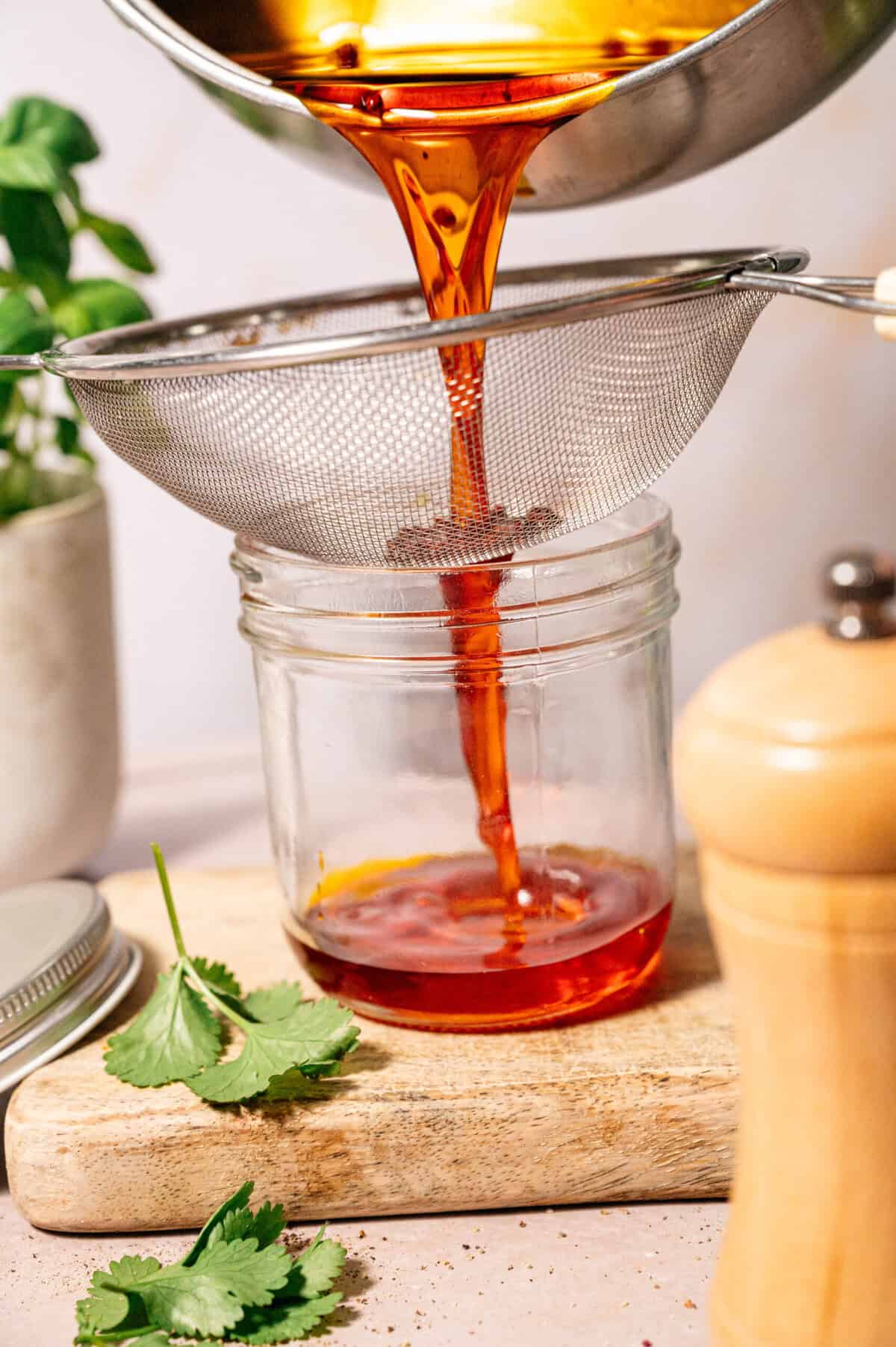
Step 4: Turn off the heat and let the oil cool on the stove for 10 to 15 minutes, then strain it into a glass jar with a fine-mesh sieve.
Tips to This Recipe for Achiote Oil
- Stir frequently while the seeds steep to prevent uneven coloring.
- Don’t overheat, if the oil gets too hot the seeds can burn quickly.
- Let your oil cool completely before sealing it in a jar.
- Use within a few months for the freshest flavor and color.
Achiote Oil Variation Ideas
- Garlic-infused achiote oil. Add a few crushed cloves while steeping for an aromatic twist.
- Citrus hint. Steep a short piece of orange peel with the seeds for a subtle, bright flavor.
- Ecuadorian tuna salad with cassava. Swap your regular oil for achiote oil to add richness and golden color to traditional dishes.
How to Use Achiote Oil
Achiote oil is a staple in Ecuadorian kitchens. My mom always had a jar next to the stove, and so many of the dishes I grew up eating start with it. It’s not just an Ecuadorian thing, either. Cooks across Latin America and the Caribbean use achiote for color and flavor, from Puerto Rican rice dishes to Colombian stews.
Use it anywhere you’d use regular cooking oil when you want a golden color and a mild, earthy flavor:
- Sauté onions, peppers, and garlic as the base for stews and soups
- Cook rice for a golden color
- Rub it on steak or chicken before searing
- Fry eggs or scramble them for breakfast
If you’re excited to get started, here are recipes on the blog where you can use your fresh achiote oil:
- Mote Pillo Ecuatoriano: hominy cooked in achiote oil with eggs, cilantro, and cheese
- Estofado de Pollo: Ecuadorian chicken stew built on an achiote oil base
- Arroz con Menestra y Carne Asada: achiote oil goes into the lentils, the steak marinade, and the rice
- Sango de Camarón: a coastal Ecuadorian shrimp and green plantain stew
How to Store This Achiote Oil Recipe
Once cooled and strained, store your achiote oil in a clean glass jar with a tight-fitting lid. Keep it in a cool, dark place (like your pantry). It’ll stay fresh for several months/ up to a year. Just make sure it’s always sealed tightly and away from direct sunlight. If you prefer, you can refrigerate it for extra freshness, but bring it to room temperature before using.

How to Make Achiote Oil From Seeds FAQ’s
Yes! Canola, vegetable, or grapeseed oil all work well because they have a neutral flavor that won’t overpower the achiote.
Once your oil turns a rich red/orange and small bubbles form around the seeds, it’s ready. Avoid letting it smoke or cook too long.
Some say it’s best not to be seeds lose most of their color and flavor after one use. But, my mom always has up to three times.
Yes, it can. Achiote oil is a natural dye, so it will stain clothes, towels, and countertops if it splatters. Wear an apron while you make it, and wipe up spills right away. It can also tint your fingers orange for a little while, but that washes off with soap and water.
Recipe for Achiote Oil
Ingredients
Instructions
- Warm oil over medium-low heat for 2–3 minutes, just until small bubbles begin to form.Then add the seeds. Do not let the oil boil or smoke.
- Reduce the heat to low once bubbles start to appear. Let the mixture simmer for 3-5 minutes, while stirring, until the oil turns a deep red-orange color.
- Turn off the heat and allow the oil to cool for 10–15 minutes on the stove.
- Carefully strain the oil through a fine-mesh strainer or cheesecloth into a glass jar or bottle, discard or save the seeds for future use.
- Let the oil cool completely, then seal and store in a cool, dark place for up to one year.