Lentil Menestra y Carne
If you grew up eating Ecuadorian food or have ever sat down to a plate at a good Latin restaurant and wondered how the lentils taste that rich and that creamy without any dairy in sight, this is the recipe. Menestra de lentejas is one of those dishes that is greater than the sum of its parts.
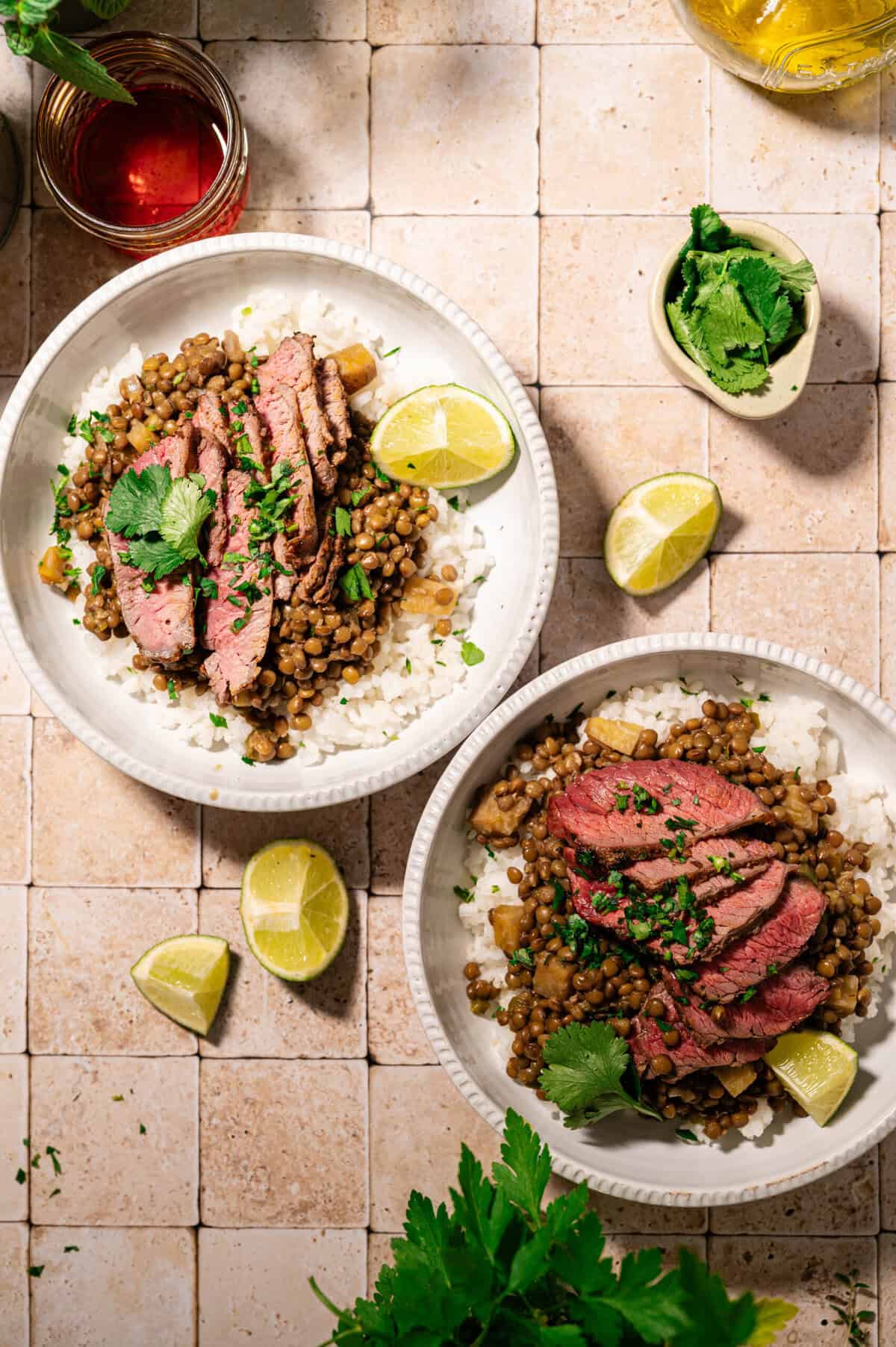
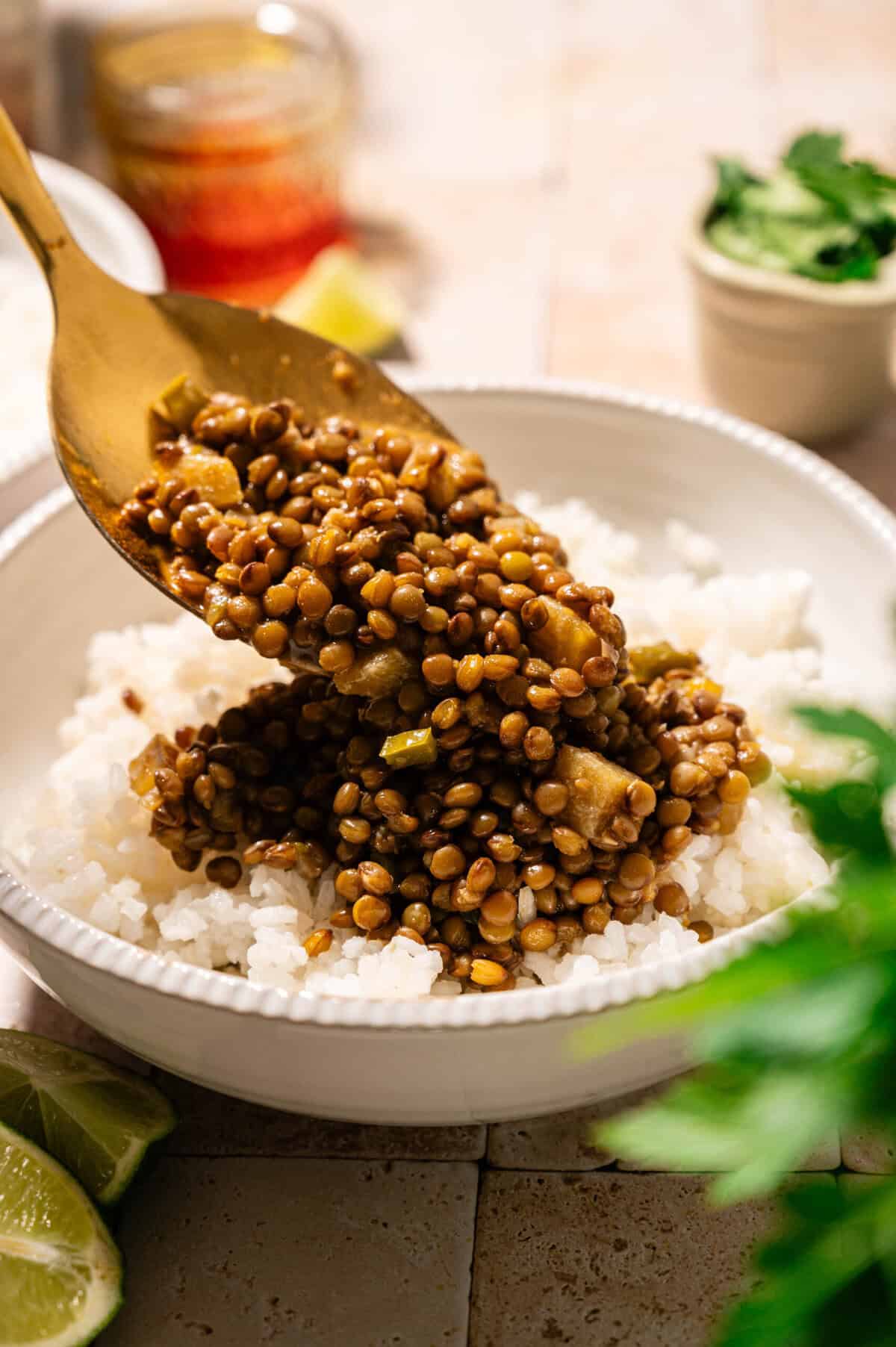
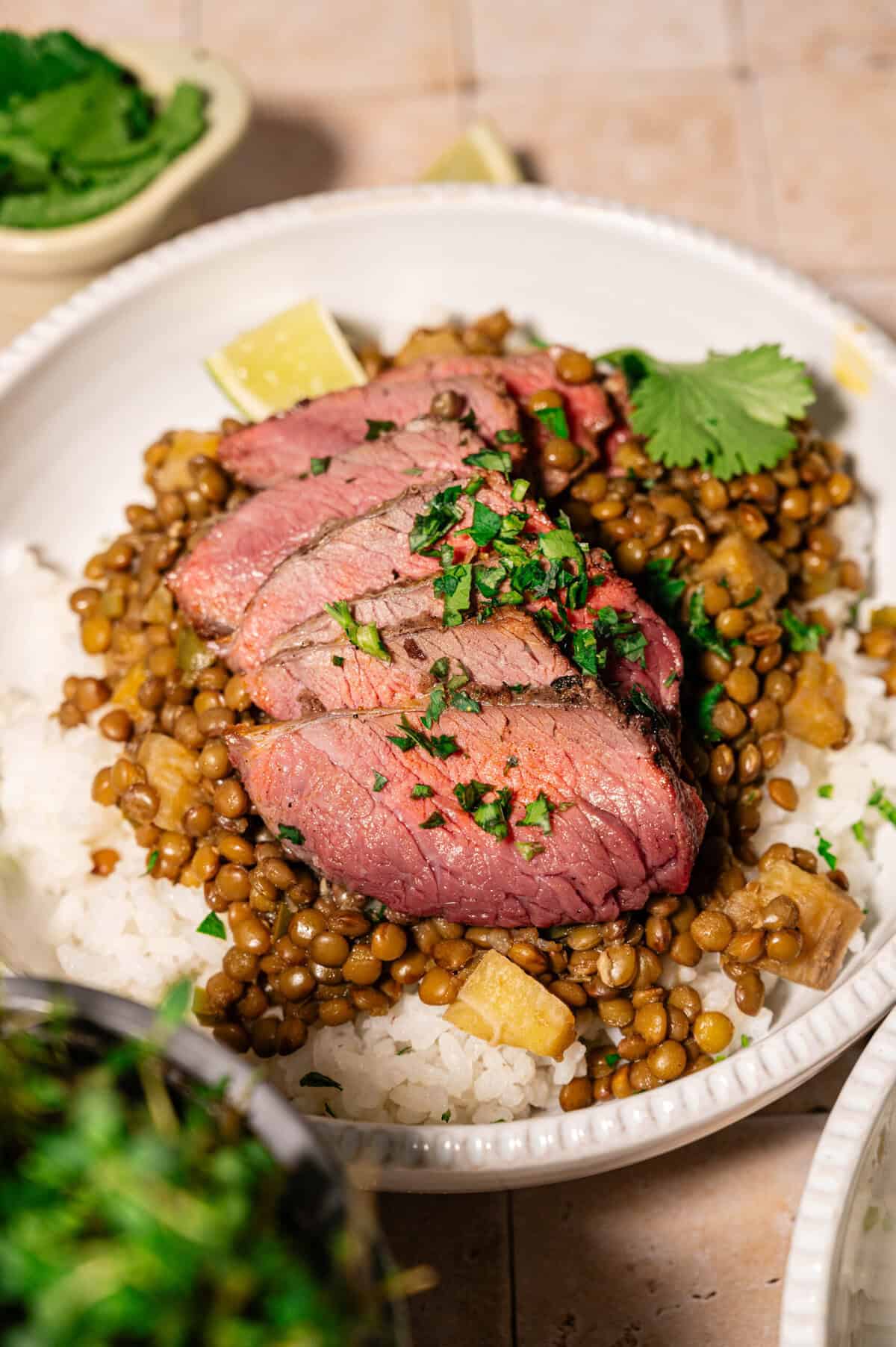
Brown or green lentils cooked down in a refrito of achiote oil, red onion, bell pepper, garlic, cilantro stems, and cumin until they’re thick and creamy and deeply flavored, with diced green plantain added for starch and body. Served over fluffy white rice with slices of marinated skirt steak seared until charred at the edges and sliced thin against the grain. A full plate, a complete meal, and the kind of food that tastes like someone made it for you with real intention.
The achiote oil is the detail that sets this apart from any generic lentil stew. It gives the menestra its warm, golden-orange color and a subtle earthy flavor that’s distinctly Ecuadorian and irreplaceable. The refrito, which is the sautéed aromatic base, is where all the flavor gets built before the lentils ever go in. And the cilantro is used in two ways, the stems go into the pot early to cook into the base, and the leaves get stirred in off the heat at the very end to keep their brightness. Every step is intentional and every step matters.
Ingredients Needed to Make Lentil Menestra y Carne
Three components that come together into one complete, stunning plate. Here’s everything you need:
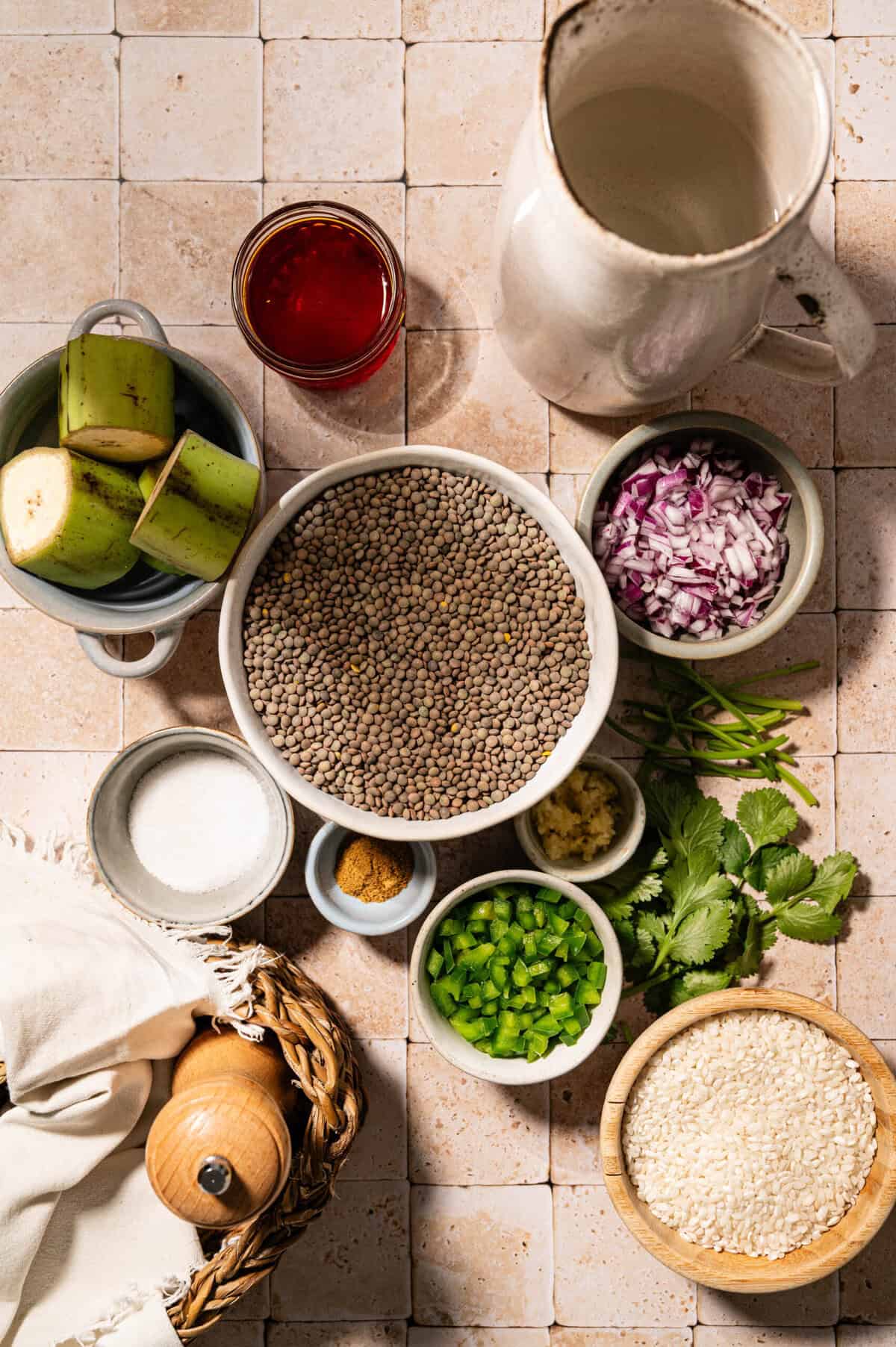
The Lentil Menestra
- Water (about 1 liter or 4 cups)
- Brown or green lentils, picked over and rinsed (about 1/2 pound)
- Achiote oil (gives the menestra its distinctive color and earthy flavor; see note below on how to make it)
- Garlic cloves, minced
- Red onion, finely diced
- Green bell pepper, finely diced
- Fresh cilantro leaves, a good handful, chopped (added at the end)
- Cilantro stems, finely chopped (added at the beginning with the refrito)
- Salt, black pepper, and ground cumin to taste
- Green plantain, peeled and diced small (adds starch and body to the menestra as it cooks down)
The Rice
- Long-grain white rice, rinsed
- Water
- Neutral oil or a little achiote oil
- Salt to taste
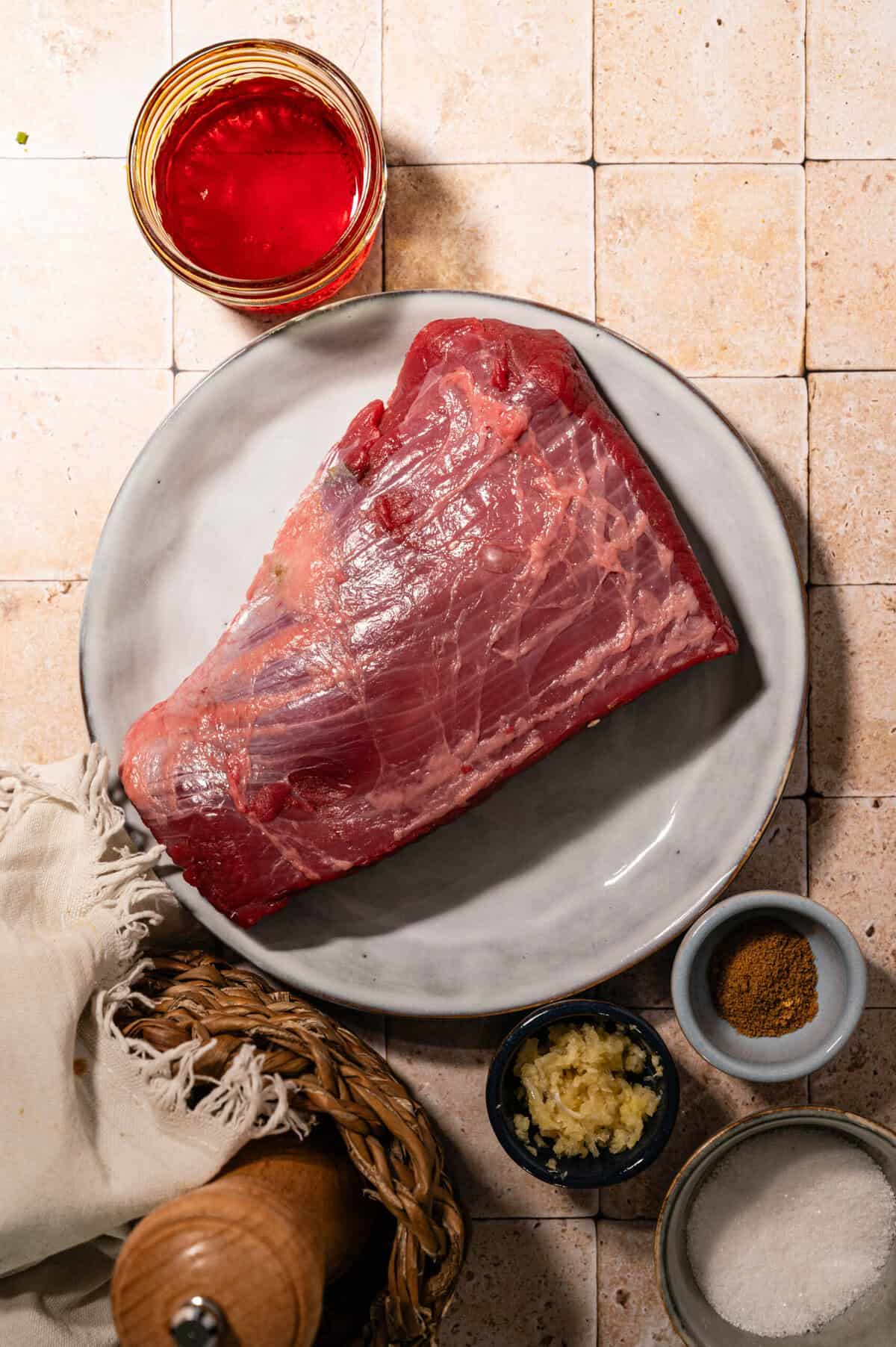
The Skirt Steak
- Skirt steak
- Garlic cloves, minced
- Ground cumin
- Ground black pepper
- Achiote oil
- Salt to taste
How to Make Lentil Menestra y Carne
Three components, each straightforward, all timed to come together on the plate at the same time. Start the rice first, build the menestra while the rice cooks, and marinate and sear the steak while the lentils finish.
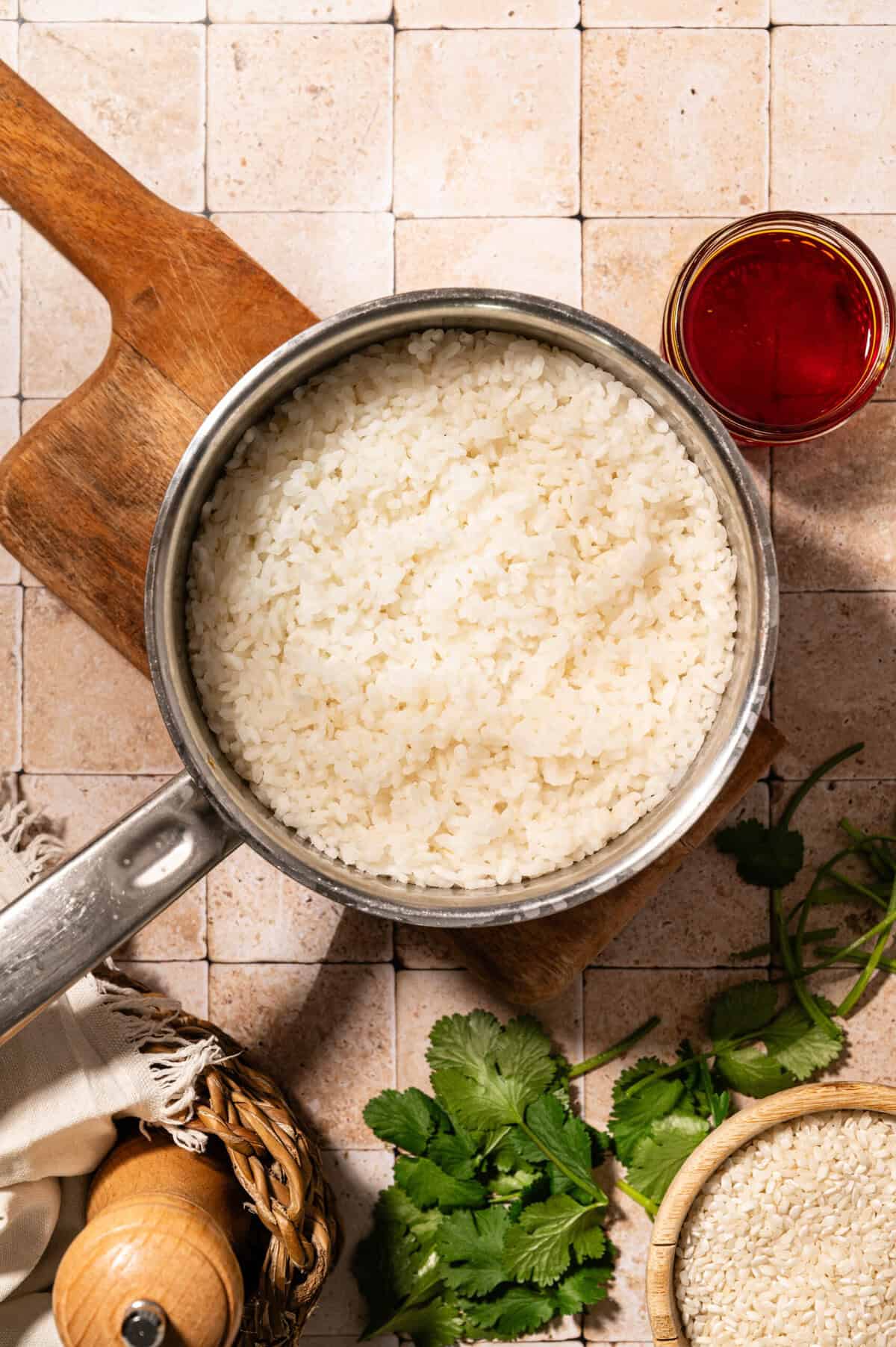
Step 1: Cook the Rice
Heat the oil in a medium pot over medium heat. Add the rinsed rice and toast for 1 to 2 minutes, stirring, with a pinch of salt until the grains look slightly translucent at the edges. This brief toasting step adds a subtle nuttiness and helps the grains stay separate rather than clumping. Add the water and bring to a boil, then reduce to the lowest heat setting, cover tightly, and cook for about 15 minutes until all the water is absorbed. Turn off the heat and let the rice steam, still covered, for 5 to 10 minutes before fluffing with a fork. Don’t lift the lid during cooking.
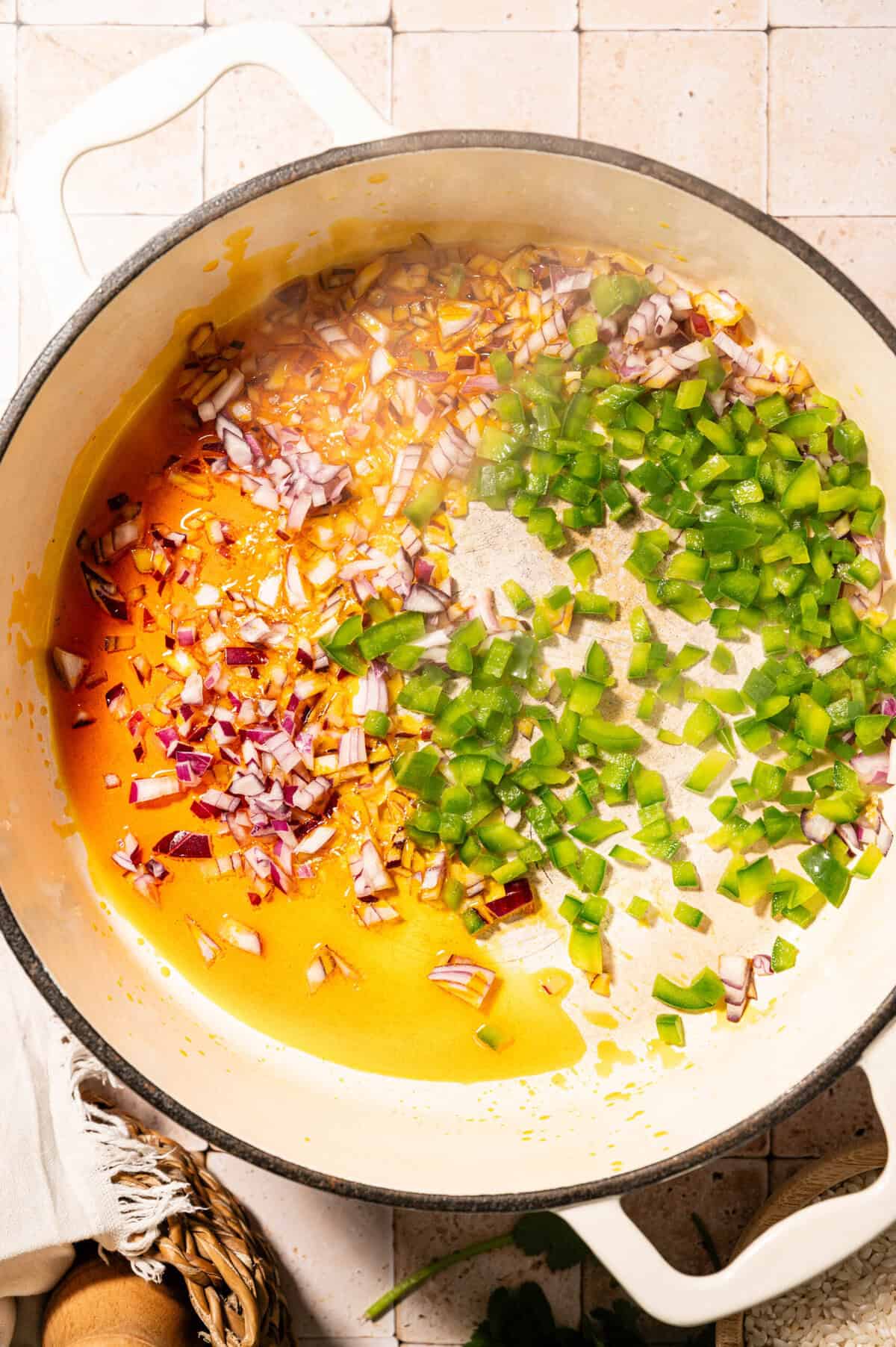
Step 2: Build the Refrito
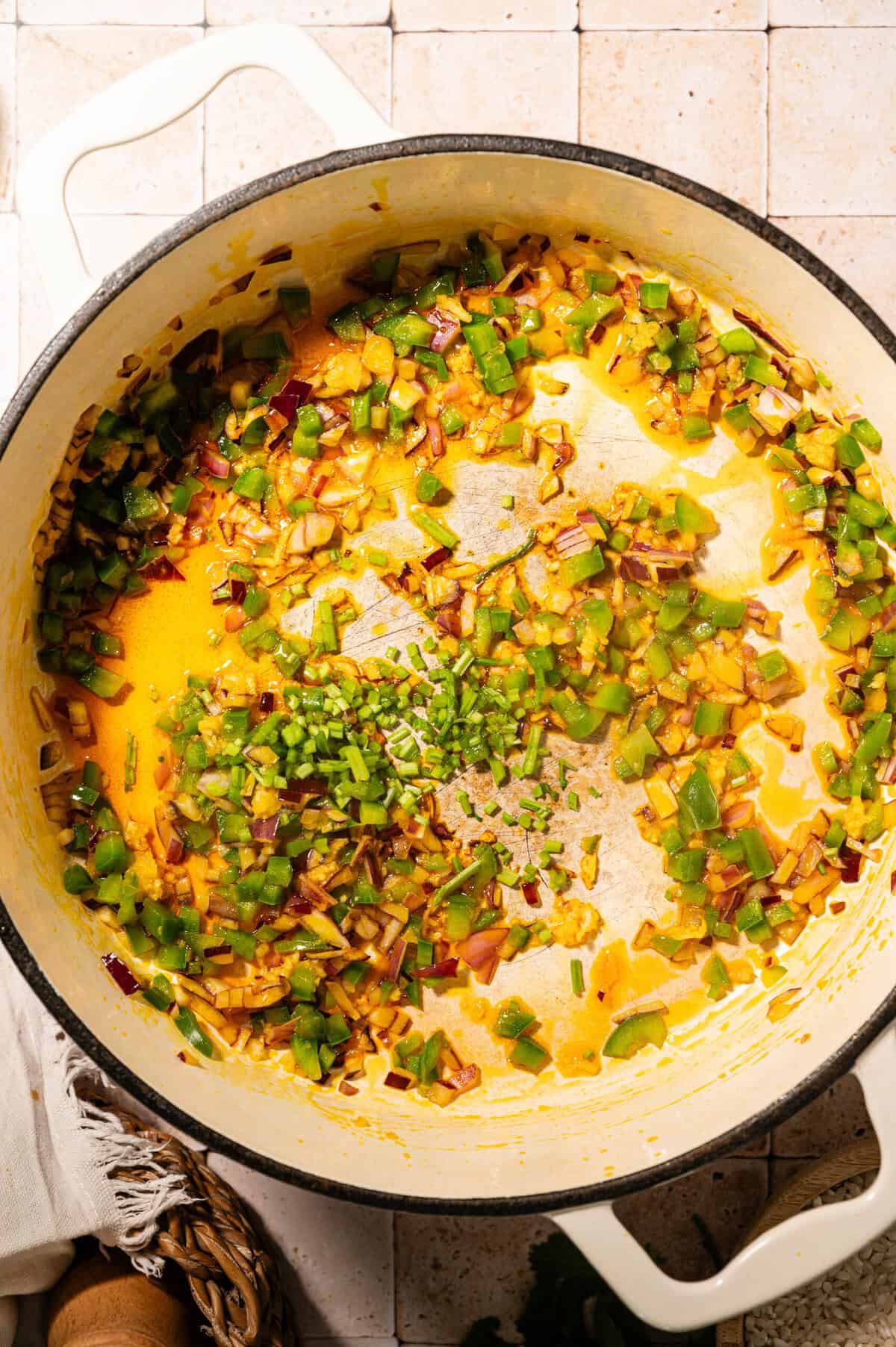
In a separate pot, heat the achiote oil over medium heat until shimmering. Add the finely diced red onion, green bell pepper, minced garlic, finely chopped cilantro stems, cumin, salt, and pepper. Sauté for 5 to 7 minutes, stirring occasionally, until the vegetables are completely soft, fragrant, and coated in the golden achiote oil. The refrito is the flavor foundation of the entire menestra and deserves full attention. Don’t rush it.
Step 3: Cook the Menestra
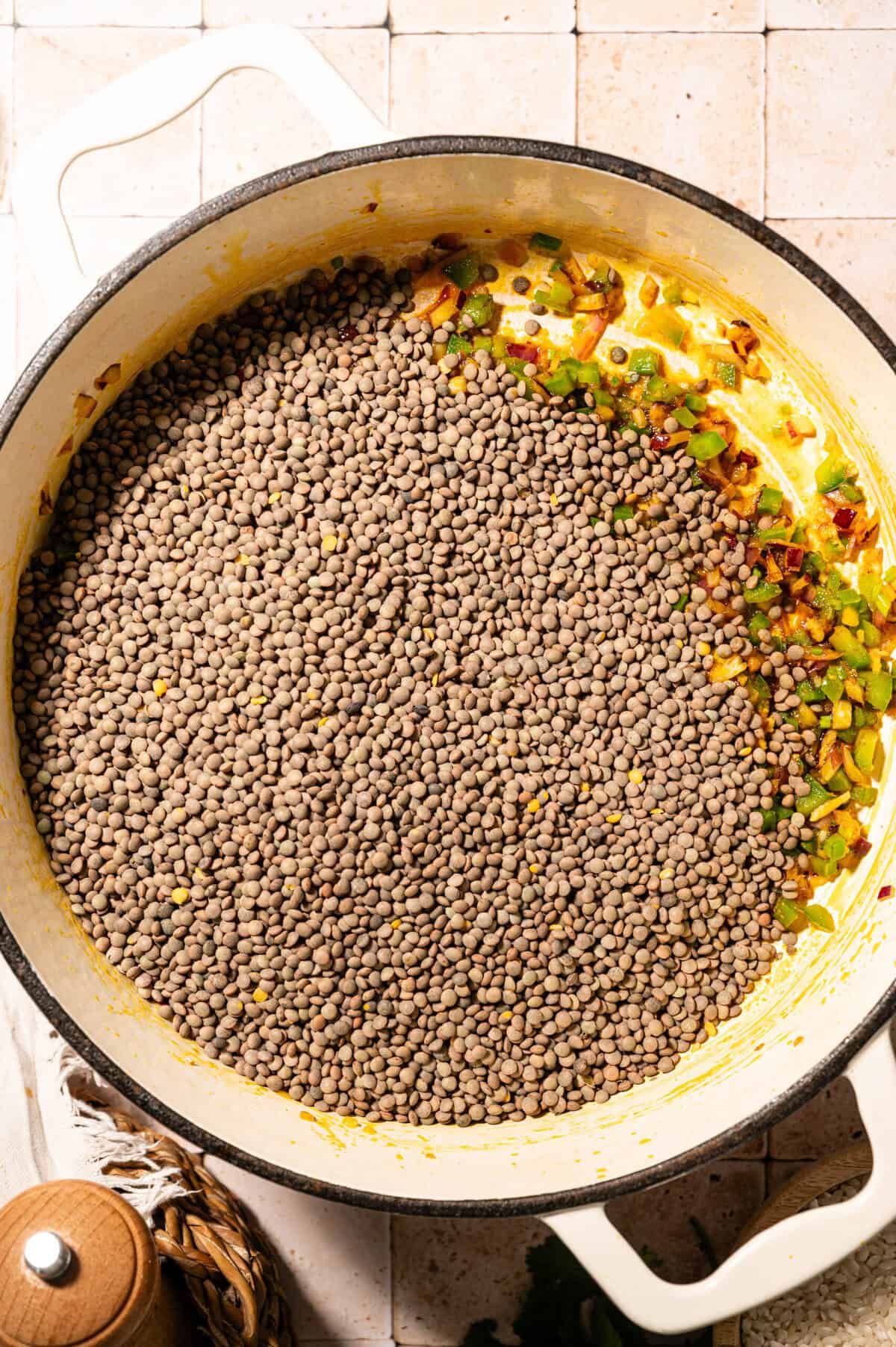
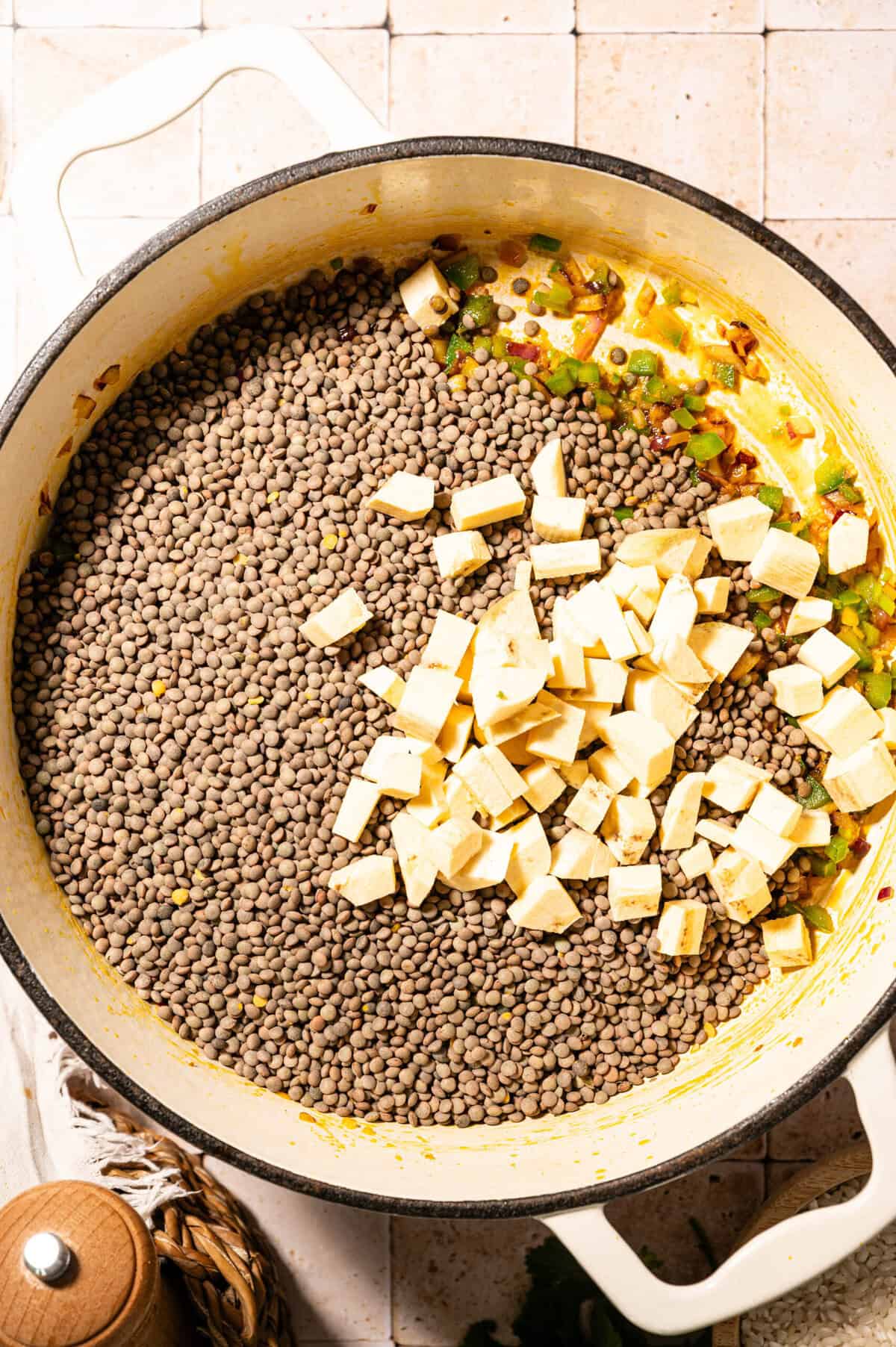
Stir the rinsed lentils into the refrito and toss to coat them in the achiote-vegetable mixture. If you’re using green plantain, add the diced pieces now. Add the water, stir to combine, and bring to a boil. Reduce to a gentle simmer and cook for 30 to 40 minutes, stirring occasionally, until the lentils are completely tender and the menestra has thickened into a creamy, porridge-like consistency. If it looks too thick before the lentils are done, add a splash more water and continue cooking. Taste and adjust the salt, pepper, and cumin. Remove from heat and stir in the fresh cilantro leaves.
Step 4: Marinate the Skirt Steak
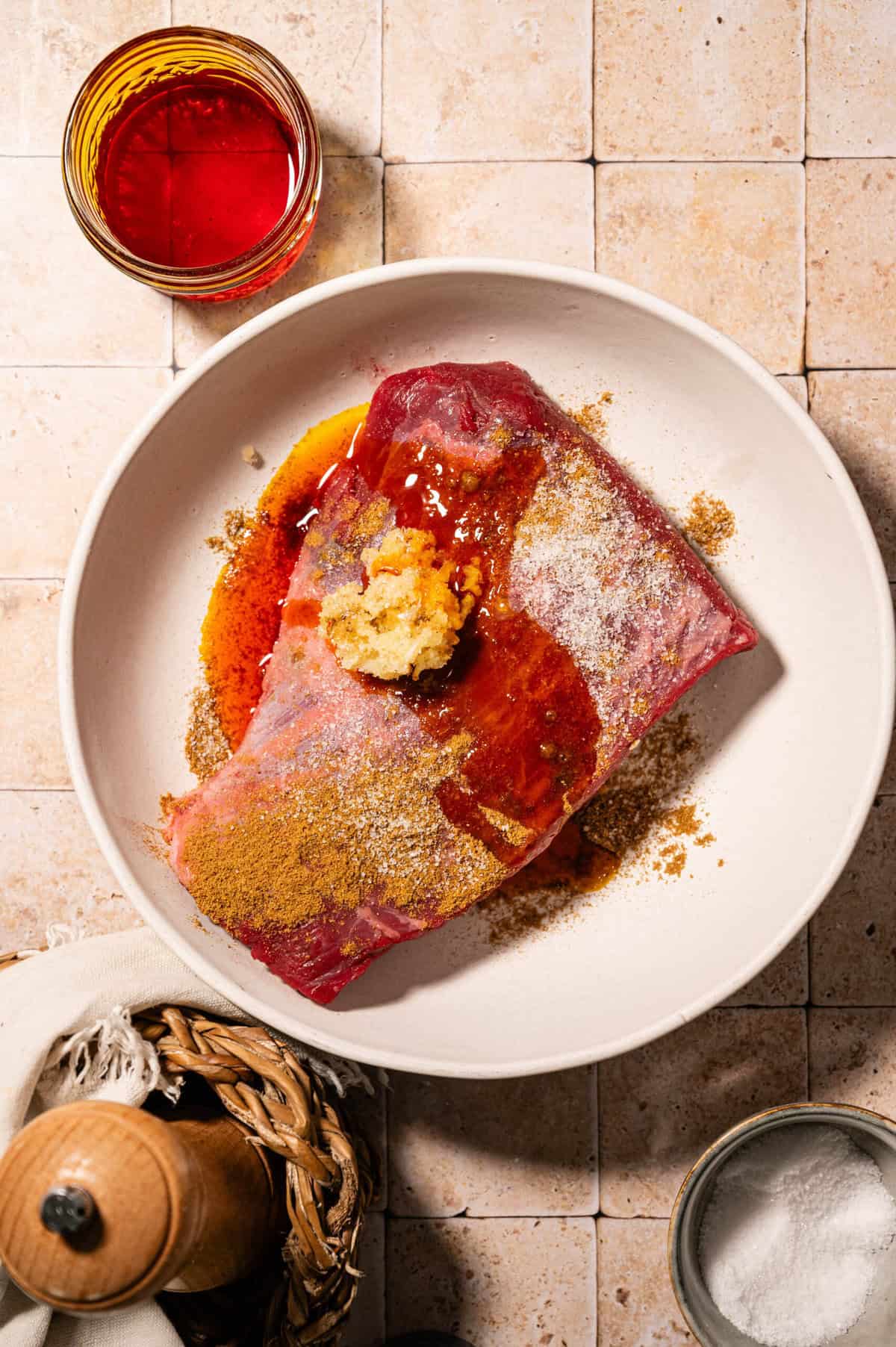
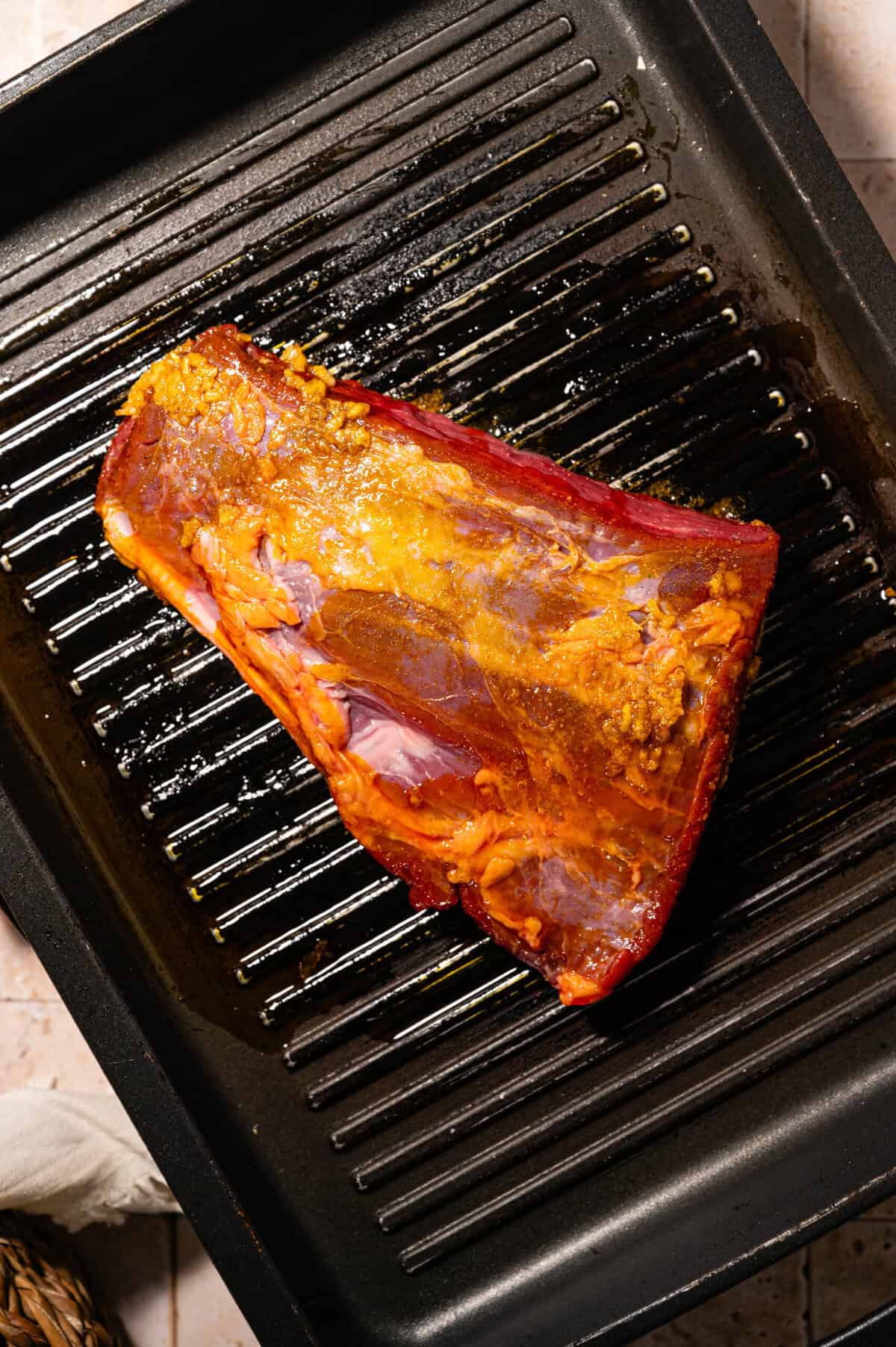
While the menestra simmers, combine the minced garlic, ground cumin, black pepper, achiote oil, and salt in a bowl. Rub the marinade all over the skirt steak until every surface is coated. Let it stand at room temperature for at least 20 to 30 minutes, or up to a few hours in the refrigerator for deeper flavor. The longer it sits, the more the cumin and garlic penetrate the meat.
Step 5: Sear the Steak
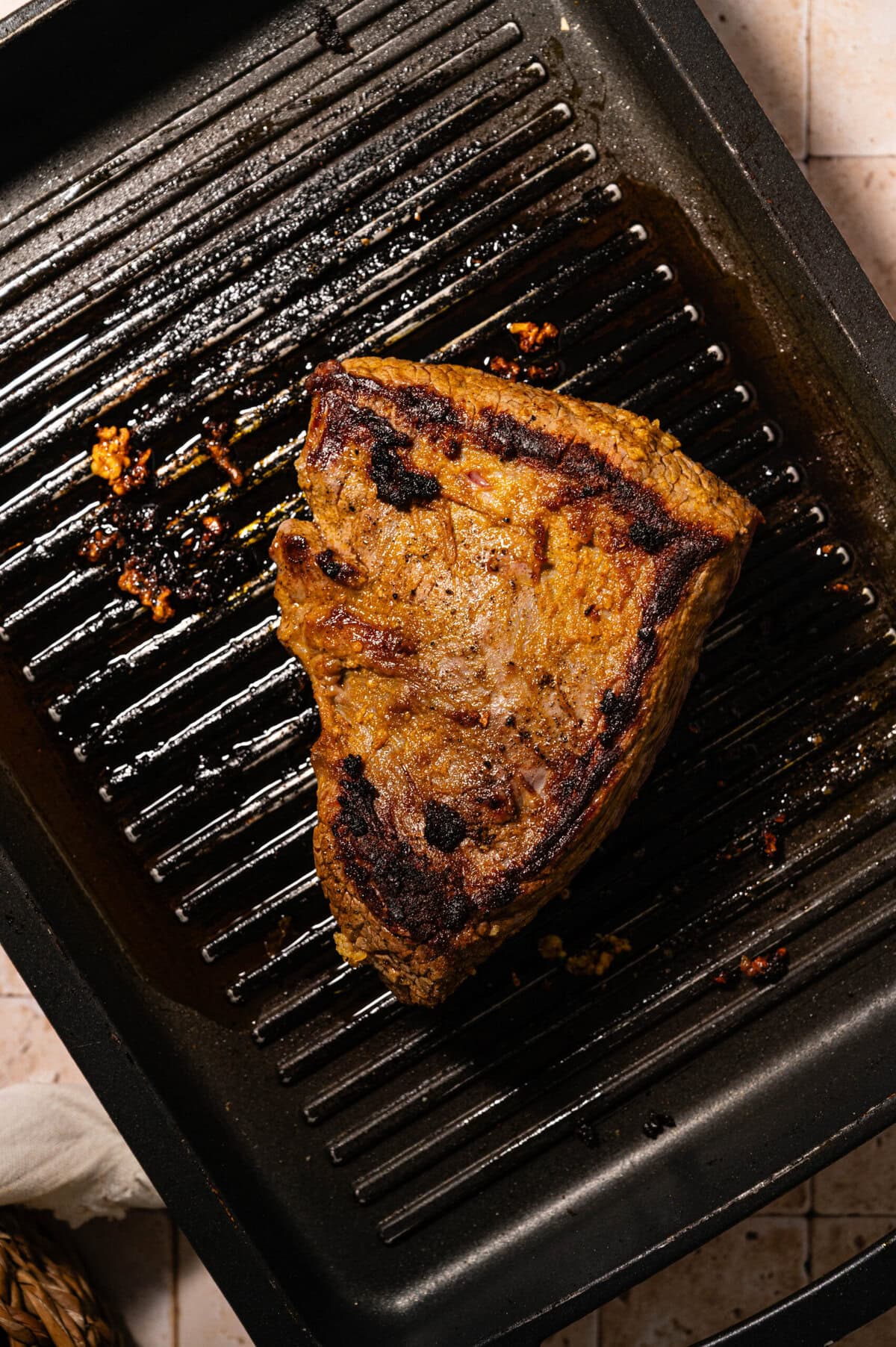
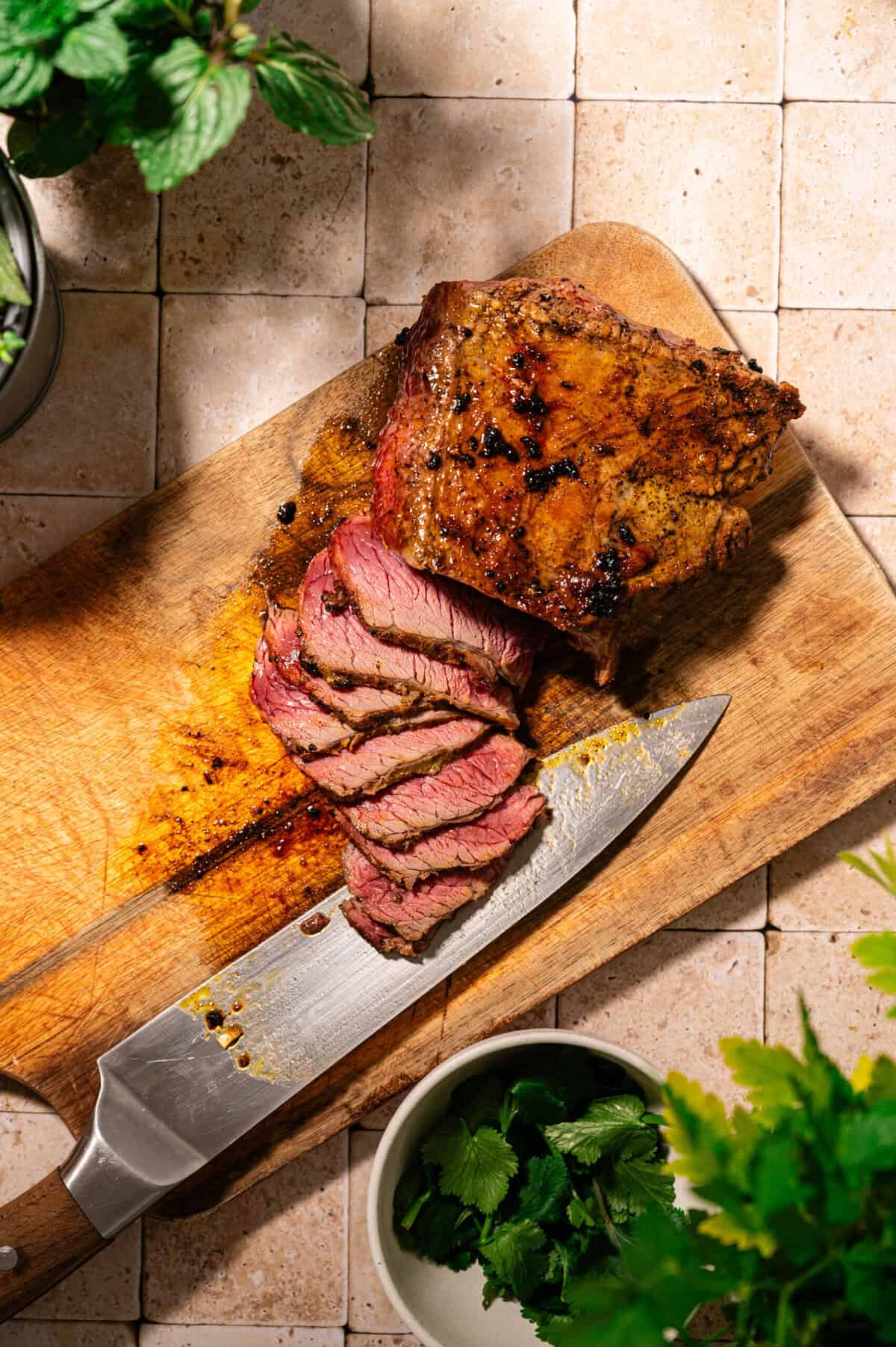
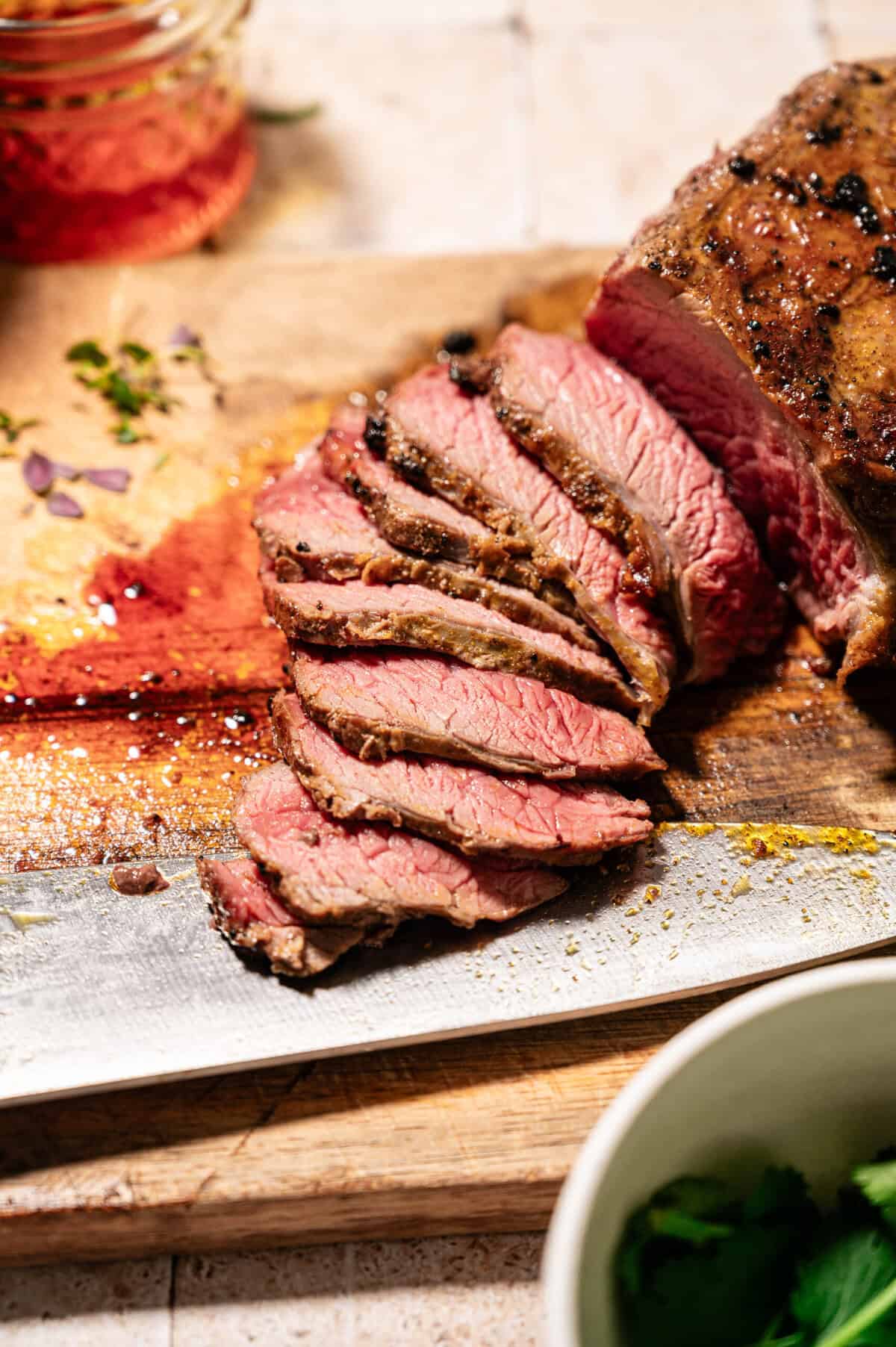
Heat a large skillet or grill pan over medium-high heat until very hot, about 2 minutes of preheating. You want the pan as hot as possible before the steak goes in to get a proper sear. Add the steak and sear for 2 to 4 minutes per side depending on thickness, until deeply browned and slightly charred at the edges. Don’t move the steak once it’s in the pan. Let the crust develop undisturbed. Remove from the heat and let it rest on a cutting board for 5 to 10 minutes before slicing. Slice thinly against the grain.
Step 6: Plate and Serve
Spoon a generous portion of rice onto each plate. Ladle the lentil menestra over or beside the rice. Top or flank with slices of the seared skirt steak. Garnish with extra fresh cilantro and lime wedges. Serve immediately.
Storing and Make-Ahead Tips
The lentil menestra stores beautifully and is genuinely better the next day after the flavors have had time to deepen. Store in an airtight container in the refrigerator for up to 4 days. It will thicken considerably as it chills. Add a splash of water when reheating on the stovetop over medium-low heat and stir until it loosens back to the right consistency. The microwave works on medium power in 60-second intervals with the same water trick.
The rice stores well for up to 4 days and reheats best in the microwave with a damp paper towel placed over the bowl to steam it back to fluffy. The steak is best eaten fresh but keeps refrigerated for up to 3 days. Reheat briefly in a hot skillet for 1 to 2 minutes rather than the microwave to preserve the texture.
For meal prep, the menestra can be made completely ahead and reheated to order throughout the week. Fresh rice and freshly seared steak take only 20 to 25 minutes and bring the meal back to its full glory each time.
How to Serve Lentil Menestra y Carne
The classic Ecuadorian plating is rice on one side, menestra ladled alongside, and steak slices draped over or beside the other two components. Each element has its own space on the plate and each bite is assembled by the person eating it. A lime wedge on the side and extra cilantro is the traditional garnish and both are worth including.
For a full Ecuadorian spread, add a simple ensalada de tomate y cebolla: thinly sliced tomatoes and red onion dressed with lime juice, salt, and a handful of chopped cilantro. It takes five minutes and the acidity cuts through the richness of the menestra and the steak beautifully.
This meal also works well for entertaining since the menestra can be made entirely ahead and the steak cooked right before serving. Set the menestra in a warm pot on the stove, make fresh rice, and sear the steak in the last 10 minutes. The plate comes together in minutes and looks and tastes completely intentional.
Frequently Asked Questions About Lentil Menestra y Carne
What is menestra?
Menestra is a traditional Ecuadorian stewed legume dish, most commonly made with lentils, black beans, or chickpeas. It’s a staple of everyday Ecuadorian cooking and typically served as part of the classic Ecuadorian plate alongside rice and some form of grilled or seared meat. The word menestra in Ecuador refers specifically to this style of slow-cooked, well-seasoned legume stew rather than the Spanish vegetable stew of the same name.
What is achiote oil and how do I make it?
Achiote oil is made by gently heating neutral oil with achiote seeds (also called annatto seeds) until the oil takes on a deep orange-red color and a subtle earthy flavor. To make it, combine 1/2 cup of neutral oil with 2 tablespoons of achiote seeds in a small saucepan over low heat. Heat gently for 5 to 7 minutes until the oil turns a vivid orange-red. Strain out the seeds and let cool. Store in a jar in the refrigerator for up to a month. Achiote oil is available pre-made in many Latin grocery stores if you prefer not to make it from scratch.
Why add green plantain to the menestra?
Green plantain adds starch and body to the menestra as it cooks down, thickening the broth naturally and giving the dish a heartier, more substantial texture. It also adds a subtle earthy flavor that is distinctly Latin. The plantain becomes soft and nearly imperceptible in texture by the time the lentils are done, but its starch stays in the pot and contributes to that creamy, thick consistency. It’s traditional in some regional versions and optional in others. If green plantain is unavailable, the menestra is still excellent without it.
Lentil Menestra y Carne
Ingredients
Instructions
- Heat the oil in a pot over medium heat, add the rinsed rice, and toast 1–2 minutes with a pinch of salt.
- Add the water, bring to a boil, then reduce to low, cover, and cook about 15 minutes until tender.
- Turn off the heat and let steam, covered, 5–10 minutes, then fluff.
- In a separate pot, heat the achiote over medium heat. Add the red onion, bell pepper, garlic, cilantro stems, cumin, salt, and pepper; sauté until soft and fragrant.
- Stir in the lentils (and diced green plantain if using) to coat with the refrito.
- Add the liter of water, bring to a boil, then lower to a gentle simmer and cook until the lentils are tender and creamy, 30–40 minutes, adding a splash more water if needed.
- Adjust salt, pepper, and cumin, then finish with chopped cilantro leaves stirred in off the heat.
- Marinate the skirt steak with garlic, cumin, black pepper, and a little oil; let stand at least 20–30 minutes (or up to a few hours in the fridge).
- Heat a large skillet or grill pan over medium-high until very hot.
- Then sear 2–4 minutes per side, depending on thickness, until nicely browned and cooked to your preferred doneness.
- Rest 5–10 minutes, then slice thinly against the grain.
- Spoon a generous portion of rice onto each plate.
- Add a ladle of lentil menestra over or beside the rice.
- Top or flank with slices of skirt steak.
- Garnish with extra cilantro and lime wedges if you like.